
Verified Standards & on-time Deliveries:



Fire Safety Certificate Pricing
Fire Safety Certificates in London: Protecting Lives, Homes, and Businesses
Fire safety certificate London” is an essential tool in protecting lives, homes, and businesses from fire. It serves as a formal acknowledgement that a building complies with the safety standards required by law. Without this certificate, you’re not just at a higher risk of fire incidents; you’re also potentially facing severe legal consequences.
Getting a fire safety certificate involves a thorough assessment by our fire safety officers. These experts evaluate everything from installing smoke alarms and fire doors to ensuring emergency exits and proper signage.
For us, staying informed and compliant with these regulations is essential. It assures that the safety measures in place are capable of protecting both people and property effectively.
Smoke Alarms vs Heat Alarms: Which Does Your Property Need?
As you consider the best fire alarm system for your property, it’s vital to understand the differences between smoke alarms and heat alarms. Both devices play significant roles in safeguarding lives and property, but they operate differently and are suited to different environments.
Smoke alarms are designed to detect smoke particles, often before flames get fully developed. They’re ideal for bedrooms, living rooms, and hallways, areas where fires may produce heavy smoke.
Smoke alarms use either ionisation technology, which responds more quickly to flaming fires, or photoelectric technology, which is better at detecting smouldering fires. It’s often recommended to use both types in combination to enhance safety.
On the other hand, heat alarms detect an increase in temperature from a fire. They’re less sensitive to false alarms caused by cooking or steam, making them perfect for kitchens and garages.
Heat alarms activate when the temperature reaches a threshold, providing an early warning of a rapid temperature rise, indicative of a flaming fire.
So, which does your property need? It depends on the room’s function and layout.
Our Fire Alarm Inspection and Installation Services Across London
Comprehensive Fire Alarm Services
Tailored Solutions for Every Property
Certified and Experienced
Expert System Planning and Design
Professional Installation
Regular Inspections and Maintenance
Your Safety, Our Priority
Peace of Mind for Property Owners
We're committed to providing a detailed and reliable service to keep you and your property safe.
Call Us Today to Schedule a Free Consultation
Fire Safety Certificate Requirements for HMOs and Rented Properties in London
For HMOs, the regulations are strict due to the higher risks associated with the property type. Every HMO must have an adequate fire detection and alarm system, emergency lighting, and fire-fighting equipment. The layout of escape routes must be clear and free of obstructions, and fire-resistant doors and walls must protect these routes.
In rented properties, although the requirements might be less rigorous than for HMOs, landlords must still install smoke alarms on every storey and carbon monoxide detectors in rooms with a solid-fuel appliance. It’s also mandatory to make sure that all provided furniture and furnishings are fire-safe.
Both types of properties require regular fire safety assessments by a qualified professional. These assessments will check the integrity of fire doors, the functionality of alarms and detectors, and the adequacy of escape routes and signage.
Documentation of these checks, along with maintenance records for fire safety equipment, must be kept up to date and available for inspection by authorities.
Meeting these requirements not only complies with the law but also greatly enhances residents’ safety. It’s our responsibility as landlords and property managers to stay informed and diligent about these fire safety standards.
The Fire Alarm Grading System Explained: Grades A to F
Understanding the fire alarm grading system is essential for selecting the right level of protection for your property. The grading system ranges from Grade A to Grade F, with each grade designed to suit different building types and fire risk levels.

Types of Fire Alarms Used in Homes and Commercial Properties
Selecting the right fire alarm system is crucial for ensuring both safety and compliance. Each system type offers unique benefits depending on the size and structure of your property. Below are the central fire alarm systems commonly used in London properties:
Conventional Fire Alarm Systems
- Best suited for smaller properties or spaces where simplicity is key.
- The building is divided into zones, each connected to a central control panel.
- When an alarm activates, the panel identifies the zone, but not the exact device location.
- Advantages: Cost-effective, easy to install, and ideal for low-risk or compact areas.
Addressable Fire Alarm Systems
- Designed for larger or more complex buildings requiring pinpoint accuracy.
- Each device (detector, call point, or alarm) has a unique address.
- When triggered, the control panel displays the exact location of the fire or fault.
- Advantages: Faster emergency response, greater accuracy, and improved maintenance tracking.
Analogue Addressable Fire Alarm Systems
- Represent the most advanced technology in fire detection and monitoring.
- Continuously analyse data from each device, adjusting sensitivity to reduce false alarms.
- Allow detailed control and diagnostics for large commercial or high-occupancy buildings.
- Advantages: High reliability, flexible configuration, and intelligent response management.
Wireless Fire Alarm Systems
- Ideal for heritage sites, occupied offices, or properties where wiring is complex.
- Operate through radio communication, removing the need for physical cables.
- Quick to install with minimal disruption to your property.
- Advantages: Flexible installation, minimal building impact, and aesthetically discreet.
Each system offers distinct advantages depending on your property’s layout, occupancy level, and safety needs.
At Landlord Safety Cert, we help you choose the most effective fire alarm system to keep your building fully protected and compliant.
Step-by-Step Process of Getting a Fire Safety Certificate with Landlord Safety Cert
Securing a Fire Safety Certificate is an essential step for any landlord in London, and we at Landlord Safety Cert make the process straightforward and stress-free.
Here’s a straightforward, step-by-step guide to help you understand exactly what you need to do.
First, you’ll need to verify that your property meets all necessary fire safety regulations, including, but not limited to, proper fire escape routes, smoke detectors, and fire extinguishing equipment. Once you’re confident that your property complies, you can move on to the next step.
You’ll then contact us to arrange an inspection. Our certified inspectors are thorough and knowledgeable, ensuring that every aspect of your property’s fire safety measures meets industry standards.
After the inspection, we’ll provide you with a detailed report. If there are any issues, we’ll guide you on the necessary corrections. Once these adjustments are made, a follow-up inspection may be required.
Upon passing the inspection, we’ll issue your Fire Safety Certificate. This certificate is critical for the legality and safety of your rental proper
| Step | Detail |
|---|---|
Verify Compliance |
Check that your property meets fire safety regulations. |
Arrange Inspection |
Contact us to schedule a professional inspection. |
Receive Report |
Review the findings and make necessary adjustments. |
Correct Issues |
Implement required changes to meet safety standards. |
Obtain Certificate |
Receive your certificate after a successful inspection. |
Affordable Fire Safety Certificates in London: Clear, Honest Pricing
After guaranteeing the efficiency of securing your “Fire Safety Certificate London” with Landlord Safety Cert, let’s discuss another significant aspect: affordability.
We recognise that budgets are a genuine concern for many property owners in London. That’s why we’ve structured our pricing to be as transparent and economical as possible.
Our pricing model is straightforward. We don’t have hidden fees or complex charges. You’ll know exactly what you’re paying for upfront. We offer a range of packages to suit different needs and budgets, whether you’re a landlord with multiple properties or a small business owner. This flexibility allows you to choose the best option for your situation, without compromising on safety or compliance.
Moreover, we believe in providing value for your money. Not only do we offer competitive rates, but our team of certified experts guarantees that your fire safety inspections are thorough and comply with the latest regulations. This meticulous attention to detail can help you avoid potential fines and legal issues down the line, thereby protecting your investment.
We also provide discounts for repeat customers and those who own multiple properties. It’s our way of saying thank you for trusting us with your fire safety needs.
Accredited by:
Frequently Asked Question
If you have any questions, feel free to contact us or schedule a free consultation with our team of experts.
Can Tenants Request an EICR if the Landlord Hasn't Provided One?
Yes, tenants can request an Electrical Installation Condition Report if our landlord hasn’t provided one. It’s our right to guarantee the property’s electrical systems are safe and properly maintained.
What Happens if My Property Fails the EICR?
If your property fails the EICR, we’ll need to address the electrical deficiencies listed. Typically, you must complete necessary repairs within 28 days to guarantee your home remains compliant.
Are There Any Exemptions to Needing a Domestic EICR?
We’ve found that, in general, all homes require an electrical inspection, but there are rare exceptions. Consult a professional to see whether your situation qualifies for an exemption.
How Can I Dispute Findings From an EICR Inspection?
If you disagree with an EICR inspection’s findings, we can gather evidence, consult a qualified electrician, and request a reinspection. It’s key to address discrepancies quickly to guarantee safety and compliance.
Does a Domestic EICR Include Checking for Energy Efficiency?
We’re often asked if a domestic EICR includes checking for energy efficiency. Unfortunately, it focuses primarily on safety rather than efficiency, so it won’t assess how well your home conserves energy.
Areas We Cover
We also provide this service across several nearby London boroughs, including:

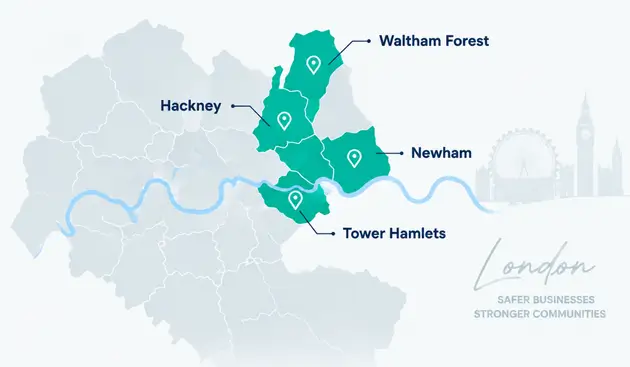
Newham
Property Safety Certificates

Tower Hamlets
Property Safety Certificates

Hackney
Property Safety Certificates

Waltham Forest
Property Safety Certificates

Areas We Cover
We also provide this service across several nearby London boroughs, including: