



Which EICR should I book? The right EICR in the UK depends on how the property is used. A domestic EICR suits the owner‑occupied homes. A landlord EICR is for rented properties and HMOs, meeting legal duties to protect tenants. A commercial EICR applies to business premises such as offices, shops, and warehouses. Each focuses on different risks, testing needs, and inspection frequencies, and understanding these differences helps owners stay compliant and safe while making confident decisions about inspections.
Key Takeaways
- Choose the EICR by how the property is used: owner-occupied home, rented property, or business/commercial premises.
- Book a Domestic EICR for homes you live in yourself, typically every 10 years or after major electrical changes or damage.
- Book a Landlord EICR for any rented property (including HMOs), at least every five years or before new tenancies if no valid report exists.
- Book a Commercial EICR for business premises such as offices, shops, warehouses, especially at lease changes, purchases, or after significant electrical works or faults.
- If in doubt, classify the property by who occupies it (tenants, owner, business users) and legal duties; then match the EICR type accordingly.
Table of Contents
What Is a Domestic EICR?
A key part of understanding a domestic EICR is knowing when it should be booked. Homeowners, landlords, and prospective buyers each face different trigger points, from routine safety checks to property sales or tenancy changes. This section outlines the typical timeframes and situations that indicate it is the right moment to arrange a domestic EICR.
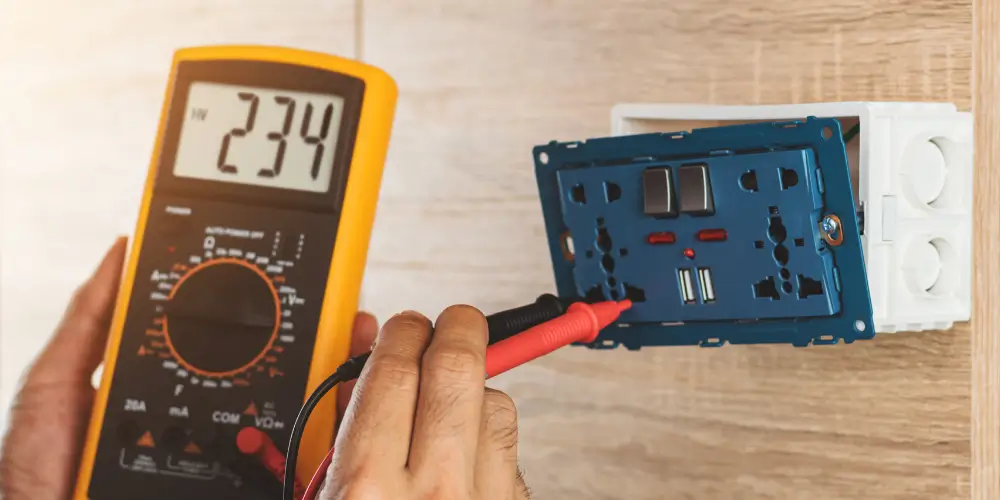
When to Book a Domestic EICR
Electrical Installation Condition Reports (EICRs) for domestic properties are formal inspections that assess the safety and overall condition of a home’s fixed electrical wiring, accessories, and consumer unit. Knowing when to book one helps a homeowner maintain control, avoid restrictions from sudden failures, and plan improvements on their own terms.
Typically, a domestic EICR is recommended every 10 years for owner‑occupied homes, or when buying or selling a property to uncover hidden defects before committing. It is also wise to book an EICR after significant electrical alterations, extensions, or following flood, fire, or major damage. Frequent tripping circuits, burning smells, buzzing sockets, or outdated fuse boxes signal it should be done sooner, protecting both safety and long‑term independence.
What Is a Landlord EICR?
A landlord EICR is an electrical inspection specifically carried out on rental properties to guarantee the safety of tenants and compliance with legal standards. It is required at key points, such as before new tenancies begin or when existing reports expire. Understanding exactly when landlords need an EICR helps prevent legal issues and supports consistent property safety.
When Landlords Need an EICR
Although homeowners sometimes choose to commission inspections voluntarily, landlords face specific legal duties around Electrical Installation Condition Reports (EICRs). In England and Wales, UK law says most private rented homes must have a valid EICR at least every five years, or sooner if the report recommends an earlier interval. A new EICR is also required before letting to new tenants where no current satisfactory report exists. If you don’t have an EICR certificate before tenancy, read our blog post: No EICR Before Tenancy Starts: No EICR Certificate Before Tenancy Starts: What Should You Do.
Landlords need an EICR after major electrical works, when properties change use (for example, from owner-occupied to rented), or when tenants report repeated tripping, overheating accessories, or visible damage. Houses in Multiple Occupation (HMOs) often attract closer scrutiny, so evidence of up-to-date testing is essential. Meeting these requirements lets landlords advertise safely, minimise disputes, and preserve maximum control over their assets.
What Is a Commercial EICR?
A commercial EICR is an electrical safety inspection carried out in business premises such as offices, shops, warehouses, units, restaurants, cafes, and shared workspaces.
An electrician carrying out a Commercial EICR inspects distribution boards, sockets, lighting, emergency lighting, and fixed equipment circuits, then tests for faults, deterioration, and overloaded or altered circuits. Findings are graded so owners and managers can see which issues demand immediate action and which can be scheduled.
It helps owners, tenants, and managers confirm that fixed wiring and equipment are safe and compliant with current regulations. This type of report is often required at specific intervals, during lease changes, or before refurbishments and business expansions.
When Businesses Need a Commercial EICR
When electrical installations power offices, shops, warehouses, or any other non-domestic premises, a Commercial Electrical Installation Condition Report (EICR) becomes the formal mechanism for evaluating their safety and compliance. Businesses typically need a Commercial EICR when they take on a new lease, purchase a property, or considerably alter existing electrical systems. It also becomes essential after incidents such as electrical faults, fires, or repeated tripping, when management wants clear, expert evidence of the installation’s condition.
Across offices, shops, warehouses, restaurants, cafes, and shared workspaces, a Commercial Electrical Installation Condition Report (EICR) is the formal assessment used to check that fixed wiring and associated components remain safe and compliant. It is tailored to the way each space is actually used: open-plan desks, storage racking, food preparation areas, customer zones, and flexible hot-desking setups.
Domestic EICR vs Landlord EICR
Many homeowners and landlords assume a Domestic EICR and a Landlord EICR are different types of inspection, but in practice they follow the same core testing process and standards. The electrician still checks wiring, protective devices, and overall safety against BS 7671, whether the property is owner‑occupied or rented out.
The true difference lies in purpose and documentation. A Domestic EICR typically supports personal peace of mind, renovation plans, or a house sale. A Landlord EICR, however, is framed around legal duties, tenancy expectations, and evidence for insurers or local authorities.
- A family home with children playing near sockets
- A city flat between tenancies, freshly repainted
- A multi‑let house where strangers share the same hallway
Landlord EICR vs Commercial EICR
Although both aim to prove an installation is safe, a Landlord EICR and a Commercial EICR sit in different risk and regulatory contexts. A landlord report focuses on dwellings offered to tenants, while a commercial report targets spaces used for trade, services, and public access. Both protect people, but the exposure, equipment, and documentation standards differ.
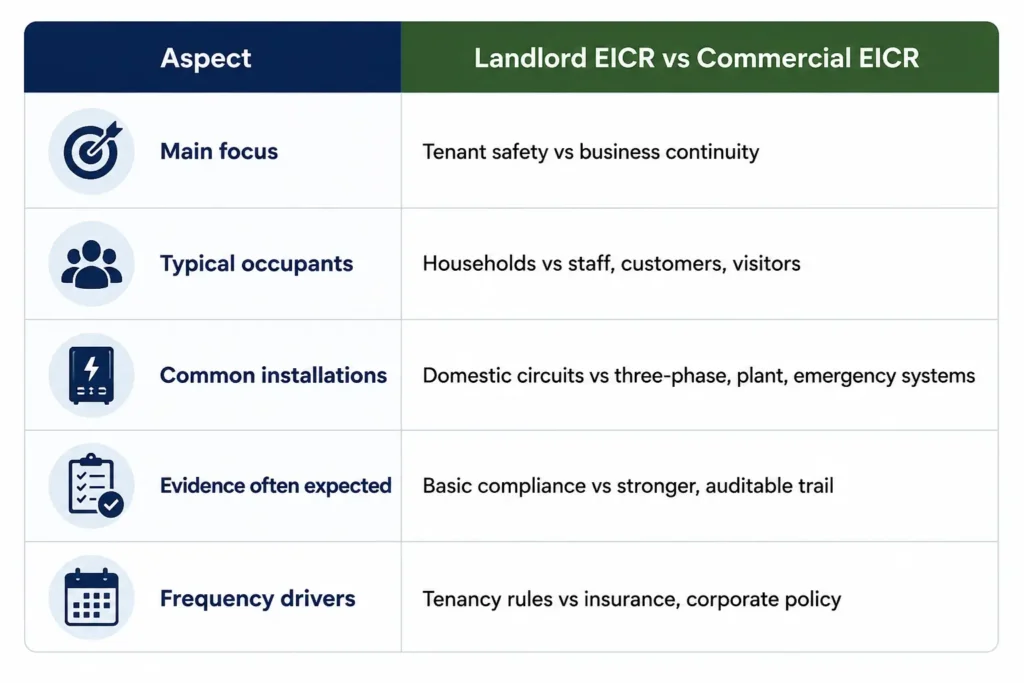
Choosing the correct format keeps control, reduces disputes, and supports hassle‑free, independent use of the property.
How Property Use Affects the EICR Type
The type of EICR required is dictated less by the building’s size and more by how the space is actually used day to day. A former townhouse converted into co‑working studios, for instance, will usually fall under a commercial-style EICR, even if it still “looks” domestic from the street. What matters is the pattern of occupation, the level of public access, and the kind of equipment drawing power.
To picture it:
- A kitchen table used for laptops feels domestic; a hot‑desk hub humming 24/7 feels commercial.
- A spare room with a single tenant is one thing; a therapy room with back‑to‑back clients is another.
- A quiet home salon with friends dropping in differs from a busy high‑street studio with strangers all day.
Choosing the Right EICR for Rental Properties
When a property is rented out, choosing the correct EICR type hinges on who lives there, how often occupants change, and whether it’s classed as a single dwelling or a House in Multiple Occupation (HMO). For a standard single-let home, a Landlord EICR is normally appropriate, even though the installation itself is “domestic.” This aligns the inspection with landlord-specific legal duties and typical five‑year renewal cycles.
Where unrelated tenants share facilities, or rooms are let individually, the property usually falls under HMO rules. In such cases, a Landlord EICR tailored to HMOs is essential, reflecting higher risk and tighter safety expectations. Short‑term lets and serviced accommodation often benefit from similarly frequent, landlord‑focused inspections to keep occupation flexible yet compliant. Here is the EICR guide for rental properties: Do I Need an EICR Before Renting? Do I Need an EICR Before Renting Out My London Property?

What Each EICR Report Should Cover
Because an EICR underpins legal compliance and practical safety, each report should clearly document the condition of the fixed electrical installation, not just offer a pass or fail. It should give owners and occupiers the information they need to live, work, or let property without being tied to hidden electrical risks.
A properly prepared EICR for domestic, commercial, or landlord purposes will normally include:
- A visual snapshot of distribution boards, wiring routes, earthing, bonding, and accessories.
- Test results for circuits, RCD performance, and fault protection, revealing issues not visible to the eye.
- A schedule of observations, coded by severity, with plain‑English descriptions that empower informed decisions.
This structure lets people balance safety, budget, and freedom of use with clear, traceable evidence.
What if Any EICR Fails
Occasionally, an EICR will identify enough issues that the installation is classed as unsatisfactory, but this does not mean the property must be abandoned or fully rewired. It simply signals that certain elements restrict safe, independent use of the space until put right.
The report’s codes guide the next move. C1 and C2 items require urgent correction before anyone can confidently use the installation without compromise. FI items demand further investigation to remove doubt. C3 recommendations are improvements, not legal obligations, but often enhance resilience and flexibility.
Once remedial work is completed by a qualified electrician, a new EICR or a written confirmation of compliance restores freedom: the installation can then be used, rented, or traded without avoidable electrical risk.
Frequently Asked Questions
Can I Be Present During the EICR Inspection, and How Long Does It Take?
Yes, individuals can usually stay during an EICR inspection; electricians may even prefer it for access and questions. Duration varies: small flats around 2–3 hours, typical houses 3–4 hours, larger or complex properties longer.
How Do I Verify That My Electrician Is Qualified to Carry Out an EICR?
They should check the electrician’s registration with a UK competent person scheme (NICEIC, NAPIT, ELECSA), confirm they’re qualified for inspection and testing, hold current insurance, can issue EICR certificates, and provide traceable registration details.
Are There Tax-Deductible Benefits for EICR Costs on Rental or Commercial Properties?
Yes, EICR costs can usually be treated as tax-deductible maintenance expenses for both rental and commercial properties, reducing taxable profit. Deductibility depends on local tax law, property use, and proper invoicing; professional tax advice is essential.
How Should I Store and Back up EICR Reports for Future Legal or Insurance Needs?
They should store EICR reports as searchable PDFs, backed up in at least two locations: encrypted cloud storage and an offline drive. Clear file naming, dates, property identifiers, and sharing copies with insurers and solicitors protects future freedom.
What Signs Suggest I Should Book an EICR Earlier Than the Recommended Interval?
They should book early if breakers trip often, lights flicker, sockets overheat, burning smells appear, electric shocks occur, DIY alterations were done, flooding or damage happened, or they plan major changes, letting, or selling the property.
Conclusion
By concluding “Which EICR should I book?”, selecting the correct EICR depends on how a property is used rather than simply its type. Domestic EICRs suit owner-occupied homes, landlord EICRs are vital for rented properties, and commercial EICRs cover business premises. Understanding these distinctions guarantees legal compliance, safety, and appropriate protection for occupants. If any EICR fails, prompt remedial work and retesting are essential to restore compliance, safeguard users, and maintain the integrity of the electrical installation.