

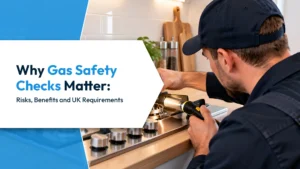

What does a gas safe engineer check during a gas safety inspection? During a gas safety inspection in the UK, a Gas Safe engineer checks gas appliances for correct installation, stable flames and working safety controls. They inspect pipework, joints and connections for damage or leaks, and test gas tightness and operating pressure. Flues and ventilation are examined to guarantee safe removal of fumes and adequate air supply. Appliances are then safety-rated (Safe, At Risk, Immediately Dangerous, or Not to Current Standards), with what happens next explained in more detail.
Key Takeaways
- Checks gas appliances are correctly installed, safely operating, and have stable, correctly coloured flames with working safety shut-off and flame supervision devices.
- Inspects accessible gas pipework, joints, and connections for damage, corrosion, strain, and signs of leaks or unsafe DIY alterations.
- Tests gas tightness and verifies standing and operating pressures meet required levels while appliances run under normal conditions.
- Examines flues and ventilation to ensure safe removal of combustion products, adequate air supply, and absence of blockages or distress.
- Records findings, assigns safety classifications (Safe, AR, ID, NCS), and issues a Gas Safety Record detailing results and any necessary actions.
Table of Contents
Checking Gas Appliances for Safe Operation
Checking gas appliances for safe operation involves systematically evaluating whether each appliance is installed correctly, functioning as intended, and not presenting a risk of gas leaks, fire, or carbon monoxide exposure. During a UK gas safety inspection, the Gas Safe engineer focuses on how each appliance burns gas, how combustion products are removed, and whether essential safety controls work properly, allowing occupants to live freely without hidden hazards.
They verify that flames are stable and correctly coloured, that ventilation requirements are met, and that flues or chimneys discharge safely and are not blocked. Appliances are checked against manufacturer instructions, ensuring they are suitable for the room and used as designed, rather than improvised for other purposes. The engineer also tests safety devices such as flame‑supervision components and shut‑off controls, confirming they operate reliably so that, if something does go wrong, the appliance cannot continue running in an unsafe condition.

Inspecting Gas Pipework and Connections
Inspecting gas pipework and connections forms a core part of a UK gas safety inspection, ensuring gas is transported from the meter to each appliance without leakage or damage. The engineer visually traces accessible sections of pipework, looking for corrosion, kinks, abrasion, or unsupported runs that could compromise integrity over time. Particular attention is paid to areas hidden behind appliances, along skirting boards, and where pipes pass through walls or floors.
Connections, joints, and fittings are examined to confirm they are secure, appropriately sealed, and made with suitable materials. The engineer checks for signs of past DIY alterations, improper extension of pipe runs, or outdated components that no longer comply with current standards. They also assess whether pipe routes allow adequate ventilation and avoid undue heat or mechanical strain. By confirming the physical condition and layout of the pipework, the inspection protects occupants’ freedom to use gas safely and confidently.
Checking Gas Tightness and Operating Pressure
Beyond the physical condition of pipework and fittings, a gas safety inspection also verifies that the system is leak-free and operating at the correct pressure. The Gas Safe engineer performs a gas tightness test on the installation using calibrated equipment, confirming that no measurable pressure drop occurs over a set period. This protects occupants’ right to use gas appliances without hidden risk.
They then check operating and burner pressures against manufacturer data and legal standards. Correct pressure guarantees efficient combustion, stable flames, and consistent heat output, helping households avoid both danger and waste.
| Aspect | What the Engineer Does | Why It Matters for Freedom |
| Tightness test | Monitors pressure for drops | Confirms no unseen leaks |
| Standing pressure | Compares to supply requirements | Guarantees reliable gas availability |
| Operating pressure | Tests with appliances running | Secures efficient, steady heating |
| Record and judgement | Notes results, advises on any defects | Informs clear, independent choices |
Examining Flues and Ventilation
Examining flues and ventilation focuses on how safely combustion gases are removed and fresh air is supplied to each gas appliance. Engineers check whether these pathways allow people to use their homes freely, without hidden buildup of toxic fumes or stale air.
They typically assess:
- Flue condition and route – confirming the flue is continuous, correctly jointed, supported, and terminates in a safe, unobstructed position.
- Signs of distress – looking for staining, corrosion, cracks, or loose components that could allow products of combustion to escape into living spaces.
- Vent size and position – ensuring permanent vents are correctly sized, fixed open, and not blocked by furniture, dirt, or DIY alterations.
- Interaction with building changes – checking that new windows, insulation, or extract fans have not compromised the original flue and ventilation design, preserving both safety and occupants’ freedom of use.
Checking Appliance Combustion Performance
While flues and ventilation deal with how gases move, checking appliance combustion performance focuses on what is happening inside the appliance as gas burns. During a gas safety inspection, the Gas Safe engineer measures how cleanly the fuel is burning, because efficient combustion protects both health and personal autonomy in the home.
They typically attach a calibrated flue gas analyser to the test point and record levels of carbon monoxide (CO), carbon dioxide (CO₂) and oxygen. These readings reveal whether the flame is burning fuel efficiently or wasting energy and producing dangerous by-products. The engineer also compares results with the manufacturer’s data and current standards. Visual checks support the test results: flame shape and colour, presence of soot, scorch marks, or signs of overheating. If combustion performance falls outside safe limits, the engineer explains the findings clearly so the occupant can choose timely remedial action and keep control over their space.
Inspecting Gas Safety Controls and Protective Devices
Combustion checks show how an appliance burns gas; safety controls and protective devices determine what happens when something goes wrong. During a gas safety inspection in the UK, the engineer focuses on the mechanisms that stop faults from turning into emergencies, allowing occupants to live freely without hidden risks.
They typically verify that:
- Flame supervision devices (e.g., thermocouples, flame sensors) correctly cut off gas if the flame fails, preventing unburned gas from building up.
- Gas shut-off valves operate smoothly and fully isolate the supply when required, ensuring the user can stop the system quickly and confidently.
- Pressure relief and overheat devices respond at the right thresholds, guarding against dangerous over‑pressure or overheating conditions.
- Interlocks and automatic cut-outs (such as boiler lockouts or fan‑proving switches) shut the appliance down safely when ventilation, ignition, or extraction is compromised, ensuring faults never silently accumulate.
Inspecting Appliance Installation Standards
Beyond checking how an appliance operates, a UK gas safety inspection also confirms that it has been installed to the correct standards from the outset. The engineer evaluates whether the installation respects both legal requirements and the occupant’s right to use gas appliances without unnecessary restriction or risk. Positioning, secure mounting, and appropriate clearances are checked so that users can enjoy heat and hot water without compromising safety.
A Gas Safe engineer typically reviews installation aspects such as:

Recognising Gas Safety Deficiencies
Many gas safety deficiencies reveal themselves through subtle signs long before they become emergencies. During a UK gas safety inspection, the Gas Safe engineer focuses on evidence that an installation is drifting away from safe performance, even if it still appears to work. Recognising these deficiencies early protects occupants’ freedom to live, rent, or work in the space without hidden risk or restrictive downtime.
- Visible condition issues – Corroded pipework, damaged hoses, loose fixings, or staining around appliances suggest deterioration that could develop into leaks or combustion problems.
- Combustion indicators – Lazy yellow flames, excessive condensation, or soot deposits around burners and vents indicate inefficient or incomplete combustion.
- Ventilation concerns – Blocked vents, sealed air bricks, or improvised covers limit air supply, undermining both combustion quality and fume removal.
- Operational irregularities – Frequent burner lockouts, unusual noises, or inconsistent heating output hint at underlying faults needing investigation.
Classify Unsafe Gas Appliances
Although an appliance may still operate and provide heat, a Gas Safe engineer must classify it according to clearly defined UK safety categories that reflect the level of risk it poses. This structured approach prevents vague judgments and gives occupants clear information to decide how quickly to act.
The engineer typically uses four main classifications, guided by the Gas Industry Unsafe Situations Procedure (GIUSP). Each label shapes what must happen next: whether the appliance can keep running, must be turned off, or demands immediate disconnection to protect life and property.
| Classification | Risk Level | Typical Engineer Action |
| Safe | No identified risk | Leave in use, advise routine servicing |
| At Risk (AR) | Potentially dangerous | Advise user, recommend switching off |
| Immediately Dangerous (ID) | Serious and immediate danger | Disconnect and label, seek consent where possible |
| Not to Current Standards (NCS) | Non‑compliant but not dangerous | Inform user, no forced shutdown |
These categories allow informed, autonomous choices about ongoing appliance use.
Documenting the Inspection Results
Once an appliance has been given a safety classification, the next step is to record those findings in a clear, permanent form. The Gas Safe engineer documents results so that the occupier can act independently, without guesswork or reliance on memory. Every note becomes a traceable snapshot of the system’s condition at a specific moment in time.
Key elements typically recorded include:
- Appliance details – make, model, location, and fuel type, allowing future engineers or owners to verify exactly what was inspected.
- Measurement results – combustion readings, operating pressures, ventilation checks, and flue performance, logged in objective numerical form.
- Safety classifications and defects – precise references to “At Risk” or “Immediately Dangerous” status, with concise descriptions of the issues found.
- Engineer observations and recommendations – clear, practical notes outlining what should change so the user can plan repairs, upgrades, or replacements on their own terms.

Issuing the Gas Safety Record
When the inspection is complete and findings are fully documented, the Gas Safety Record becomes the formal proof of a property’s gas safety status. The engineer issues this document only after confirming that all mandatory checks have been carried out in line with Gas Safe regulations. For landlords and property owners who value flexibility and control, this record is the key document that allows gas appliances to be used and tenancies to continue lawfully.
The record typically includes the engineer’s Gas Safe registration number, inspection date, property address, details of each appliance checked, test results, and confirmation of compliance at the time of inspection. It may be provided in digital or paper form, allowing owners to store and share it in whatever way suits their lifestyle. Once issued, the Gas Safety Record must be kept accessible for reference and for meeting legal obligations. You must know the Common Reasons a Property Fails a Gas Safety Inspection: UK Landlord Guide.
Explaining Any Required Remedial Work
Clear communication about any remedial work is an essential part of a gas safety inspection, especially for owners who want to stay in control of their property decisions. A Gas Safe engineer is expected to translate technical findings into plain, actionable options so the owner can choose how and when to proceed, while still meeting legal duties and safety standards.
Typically, the engineer will clarify:
- What needs attention – which appliance, pipework, or flue is affected, and how it fails to meet current safety requirements.
- Risk level and urgency – whether the issue is “At Risk”, “Immediately Dangerous”, or advisory, and what that means in practice.
- Available remedies – from repair and part replacement to full appliance upgrade, outlining pros, cons, and likely disruption.
- Next steps and timescales – what must be done immediately, what can be scheduled, and how this aligns with the owner’s preferred level of control and flexibility.
Frequently Asked Questions
How Often Should I Book a Gas Safe Inspection for My Property?
They typically book a gas safe inspection annually; landlords with tenants must do so every 12 months by law. Homeowners choose yearly checks to stay independent, prevent breakdowns, and avoid dangerous leaks that could quietly remove their freedom. If you are going to let your property, here is the guide on Gas Safety Check Before New Tenants Move In: London Landlord Guide.
What Qualifications Must a Gas Safe Engineer Legally Have in the UK?
How Long Does a Typical Gas Safety Inspection Usually Take?
A typical gas safety inspection usually takes 30–60 minutes. Duration depends on property size, number of gas appliances, ease of access, and any faults found. Larger homes or complex systems can take closer to an hour.
Who Is Responsible for Arranging Gas Safety Checks in Rented Properties?
The legal duty rests on the landlord, not the tenant. Landlords must arrange annual Gas Safe checks for all gas appliances and flues they own, keeping records and providing tenants with valid certificates before or at move‑in.
What Should I Do if I Smell Gas Before the Inspection Date?
They should treat it as an emergency: avoid switches, extinguish flames, open doors and windows, shut off the gas at the meter if safe, evacuate, then call the National Gas Emergency number and the landlord immediately.
They typically book a gas safe inspection annually; landlords with tenants must do so every 12 months by law. Homeowners choose yearly checks to stay independent, prevent breakdowns, and avoid dangerous leaks that could quietly remove their freedom. If you are going to let your property, here is the guide on Gas Safety Check Before New Tenants Move In: London Landlord Guide.
What Qualifications Must a Gas Safe Engineer Legally Have in the UK?
Conclusion
Here is the summary of “What does a gas safe engineer check during a gas safety inspection?” A Gas Safe inspection offers landlords and homeowners clear certainty that gas appliances and systems are operating safely and efficiently. By methodically checking appliances, pipework, flues, ventilation, and combustion, the engineer identifies any existing or potential hazards. Their classification of unsafe appliances, combined with clear documentation and a formal Gas Safety Record, guarantees legal compliance. Ultimately, the inspection highlights necessary remedial work, helping to protect occupants and maintain a safe property.