

Have you lost your gas safety certificate? If a UK landlord loses a gas safety certificate, the fastest option is usually to contact the original Gas Safe engineer, who can often reissue it from their records. Letting agents, landlords, housing associations, solicitors or mortgage lenders may also hold copies. If the engineer is unavailable or the record has expired, a new Gas Safe inspection is required. Tenants must receive an up-to-date record, and there are several simple ways to get back on track quickly.
Key Takeaways
- Contact the original Gas Safe engineer or company; they usually hold records and can quickly email a duplicate certificate.
- Check with your letting agent, property manager, solicitor, or mortgage lender, as they often keep copies of gas safety records.
- Search your own emails and cloud storage for prior PDFs or invoices that may include or reference the certificate.
- If the original engineer is unavailable, book a new Gas Safe engineer for a fresh inspection and new Gas Safety Record.
- Remember the Gas Safe Register cannot reissue certificates, but can confirm if a check was recorded and help you find registered engineers.
Table of Contents
Where to Get a Copy of Your Gas Safety Record
When a gas safety certificate has been lost or misplaced, the starting point is almost always the gas engineer or company that carried out the original inspection. Beyond that, individuals have several routes to regain proof of compliance without feeling boxed in by bureaucracy.
Letting agents or property managers often keep digital or paper copies for their own records, so tenants and landlords can request duplicates directly. Many larger landlords and housing associations also store certificates centrally and can reissue evidence quickly.
If the property is mortgaged, some lenders or their solicitors may hold a copy in transaction files, especially from recent purchases or remortgages. Insurers sometimes request and retain certificates as part of policy checks.
Finally, organised owners often locate copies in email archives, cloud storage, or inventory documents from check‑in or previous maintenance work, restoring freedom of movement without unnecessary delays.
Contact the Original Gas Safe Engineer
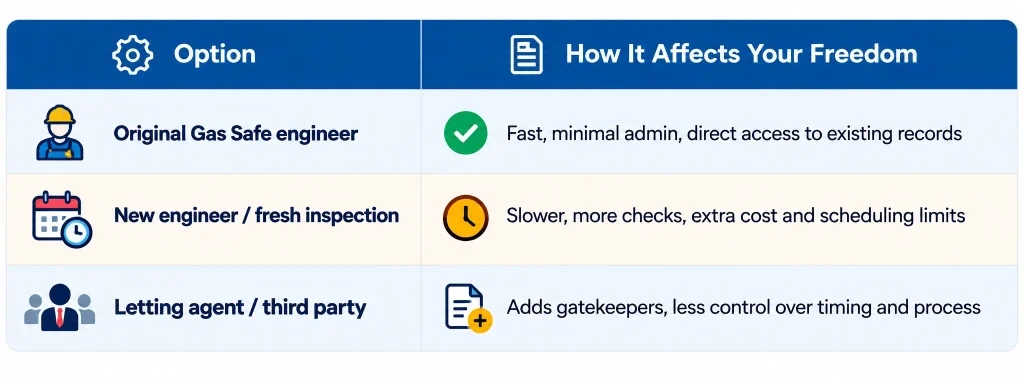
Reaching out to the original Gas Safe engineer is typically the most direct route to obtaining a replacement certificate. This route keeps the process under the control of the property owner or landlord, without unnecessary intermediaries. The engineer already holds the test results, appliance details, and compliance notes, so issuing a duplicate record is usually straightforward and fast.
A brief comparison helps clarify why this option often feels most liberating:
What Details Will You Need?
After deciding to contact the original Gas Safe engineer, the next step is to assemble the information they will ask for. Having it ready lets the engineer act quickly, without repeat calls or delays. At minimum, they will usually need the property address, including postcode, plus the name of the person or business listed on the original certificate.
They may also request the approximate date of the last gas safety check and any invoice number or job reference linked to the visit. Providing the engineer’s own name or company name, if known, helps them locate historic records in larger firms.
Details of the appliances covered (for example, boiler, hob, gas fire) can narrow the search further. Finally, clear contact details—mobile number and email address—ensure the replacement certificate can be issued and sent without friction, allowing the owner to stay compliant and free to move ahead with their plans.
What If the Original Engineer Is Unavailable?
Sometimes the original Gas Safe engineer cannot be contacted, has retired, or no longer trades under the same business name. At that moment, a landlord or homeowner can feel unfairly trapped by missing paperwork. Yet they are never legally bound to a single engineer, and they remain free to choose a new competent professional to regain compliance.
A replacement certificate cannot simply be “re‑created” without a fresh inspection. Another Gas Safe registered engineer must visit the property, check every appliance, and issue a brand‑new Gas Safety Record dated from the new inspection, not the old one.
To protect their time and autonomy, many people:
- Refuse to wait indefinitely for an unresponsive engineer to resurface.
- Book a new Gas Safe engineer quickly to restore legal cover and peace of mind.
- Use the occasion to reassess service providers, choosing someone more reliable going forward.
Can Gas Safe Help With a Lost Record?
When an engineer cannot be contacted or a certificate has simply gone missing, many landlords and homeowners naturally wonder whether Gas Safe Register itself can retrieve a copy. If you have lost your gas safety certificate, Gas Safe’s role is regulatory, not archival, but in some situations it can confirm whether a safety check was recorded on its system and by whom, helping the owner decide their next move without delay.
| Question | How Gas Safe Can (or Cannot) Help |
| Can Gas Safe issue a replacement? | No, it cannot recreate or re‑issue certificates. |
| Can it confirm an engineer’s details? | Yes, via the public register and helpline. |
| Can it confirm a check took place? | Sometimes, if the engineer logged it centrally. |
| Can it satisfy legal record‑keeping duties? | No, the legal duty stays with the landlord/owner. |
This limited but precise support lets people quickly verify facts, avoid guesswork, and choose practical next steps while keeping control of their own compliance.
When Is a New Gas Safety Check Needed?
Landlords and homeowners often discover that a misplaced certificate is not the only reason a fresh gas safety check may be required. A new inspection becomes essential whenever circumstances change in ways that could threaten control over personal safety or legal compliance.
A new gas safety check is typically needed when appliances are installed, replaced, or considerably altered, or when a property changes hands or occupants. These moments are not just administrative triggers; they are points where people either safeguard their independence or gamble with it.
Common situations include:
- After new gas appliances or pipework are fitted, to confirm everything is operating safely before full use.
- Following noticeable faults, such as soot, strange smells, or repeated boiler lockouts, which signal rising risk.
- Before new tenants move in, so both landlord and tenant enjoy clear proof that the system is safe, compliant, and ready for unrestricted everyday living.
What If the Record Has Expired?
An expired gas safety record is more than a missing piece of paper; it signals a break in documented compliance and may expose the owner or landlord to legal and financial risk. Once a record lapses, there is no continuous proof that appliances met safety standards, which can restrict a person’s freedom to rent, sell, or refinance a property without complications.
In practice, an expired record means they are no longer covered by an in-date Gas Safety Record, even if the appliances remain technically safe. Insurers, letting agents, and mortgage lenders may treat that gap as non‑compliance. The priority is to arrange a fresh gas safety check with a Gas Safe registered engineer as soon as possible and guarantee all appliances and flues are inspected. The new record re‑establishes compliance from the date of inspection onward, restoring flexibility to use, market, or manage the property with fewer constraints.

Provide a Replacement Record to Tenants
Promptly issuing a replacement Gas Safety Record to tenants preserves transparency, reduces disputes, and helps maintain legal compliance. When a record is lost, a landlord who swiftly supplies the new document signals respect for tenants’ right to feel safe and in control of their home. Tenants then have clear evidence that appliances have been checked by a qualified Gas Safe engineer and meet current standards.
Landlords typically provide the replacement by email and, if requested, as a printed copy. Clear labelling as a “Replacement Gas Safety Record” avoids confusion and reinforces trust. Tenants are then free to make informed choices about continued occupation or raising concerns.
A simple, open approach can transform a stressful situation into reassurance:
- Tenants feel heard and respected.
- Landlords demonstrate responsibility, not control.
- Both sides enjoy fewer arguments, more peace, and greater freedom in the tenancy.
Keep Future Gas Safety Records Secure
Once a replacement record has been issued and shared, the next priority is preventing similar problems by storing future Gas Safety Records securely and systematically. Landlords who value flexibility and control over their time benefit from a simple, repeatable system.
They may decide that every new certificate is immediately scanned, saved as a PDF, and dropped into a clearly named cloud folder (for example, “Gas Safety / By Property / By Year”). Strong, unique passwords and two‑factor authentication help protect these files without sacrificing easy access.
Physical copies can be kept in a slim, labelled folder per property, stored somewhere dry, fire‑safe, and reachable at short notice. Recording the certificate expiry date in a digital calendar, with reminders set 60 and 30 days in advance, reduces last‑minute pressure. By treating record‑keeping as light but consistent admin, landlords keep inspections, renewals, and tenant requests hassle‑free.
Frequently Asked Questions
Does My Home Insurance Require Proof of a Valid Gas Safety Certificate?
Home insurance may require proof of a valid gas safety certificate, depending on the policy. The individual should check their terms, because insurers can demand evidence for claims involving gas-related damage, accidents, or landlord responsibilities.
Can I Be Fined for Not Having a Gas Safety Certificate Available on Request?
Yes, landlords can be fined if a gas safety certificate is not available when required. UK regulations demand annual checks and documentary proof; failure can lead to prosecution, financial penalties, and potential invalidation of related insurance arrangements.
How Long Must Landlords Legally Store Old Gas Safety Records?
Landlords must legally store old gas safety records for at least two years, and also keep the immediately previous certificate. This retention safeguards tenants’ rights, supports regulatory checks, and preserves evidence of responsible, safe property management.
Are Digital-Only Gas Safety Certificates Legally Acceptable in the UK?
Yes, digital-only gas safety certificates are legally acceptable in the UK, provided they’re easily printable, secure, clearly legible, and accessible. Landlords must guarantee tenants and authorities can receive copies on request, preserving records for at least two years.
Do I Need a Gas Safety Certificate When Selling My Property?
They are not legally required to sell, but strongly recommended. Buyers, lenders, and solicitors often expect recent gas safety proof. Obtaining one protects the seller, reassures the buyer, and keeps everyone freer from future disputes or liability.
Conclusion
In conclusion, if you have lost your gas safety certificate, replacing a lost gas safety certificate in the UK is usually straightforward if handled quickly and correctly. By first contacting the original Gas Safe engineer, gathering the right details, and knowing when a fresh inspection is needed, landlords and homeowners can stay compliant. If the original engineer or record is unavailable, alternative engineers and Gas Safe support can help. Finally, securely storing future records protects both occupants’ safety and legal peace of mind.