



EICR costs checklist in London depend on property size, number of bedrooms and circuits, and the age and condition of the wiring. Prices rise if access is difficult, areas are cluttered or locked, or if inspections are needed out of hours or at short notice. Older fuse boxes, poor labelling, and insurer demands for detailed reports also add time and cost. VAT, callout fees, and remedial work rates must be checked in quotes. The next sections explain each factor clearly.
Key Takeaways
- Property size and circuit count: more bedrooms, sockets and circuits mean longer inspections and higher EICR fees in London.
- Access and timing: cluttered rooms, locked areas, last‑minute bookings, evenings or weekends all attract higher labour and call‑out charges.
- Wiring age and consumer unit type: older wiring, rewirable fuse boxes or poorly labelled boards require extra testing, documentation and often increase costs.
- Location and documentation: high‑demand London postcodes and insurer/agent requests for detailed reports can extend visit time and raise prices.
- Remedial work, VAT and extras: follow‑up repairs, re‑inspections, separate attendance fees and added VAT can significantly increase the total EICR bill.
Table of Contents
What Can Increase EICR Cost in London?
Multiple practical factors can push up the cost of an EICR in London, ranging from property-specific characteristics to market conditions. Larger properties with more circuits, extensions, or outbuildings demand extra inspection time, naturally raising the fee. Older or heavily altered wiring often needs more testing and investigative work, especially where records are missing.
Access also affects price: cluttered rooms, locked areas, or limited parking can slow the inspection, increasing labour costs. High-demand postcodes and peak periods give electricians greater pricing power. Short-notice bookings or evening and weekend appointments typically attract premiums. Finally, requirements from insurers, agents, or corporate landlords for detailed documentation, photos, or additional certification can lengthen the job and, consequently, the overall cost.
Property Size and Number of Bedrooms
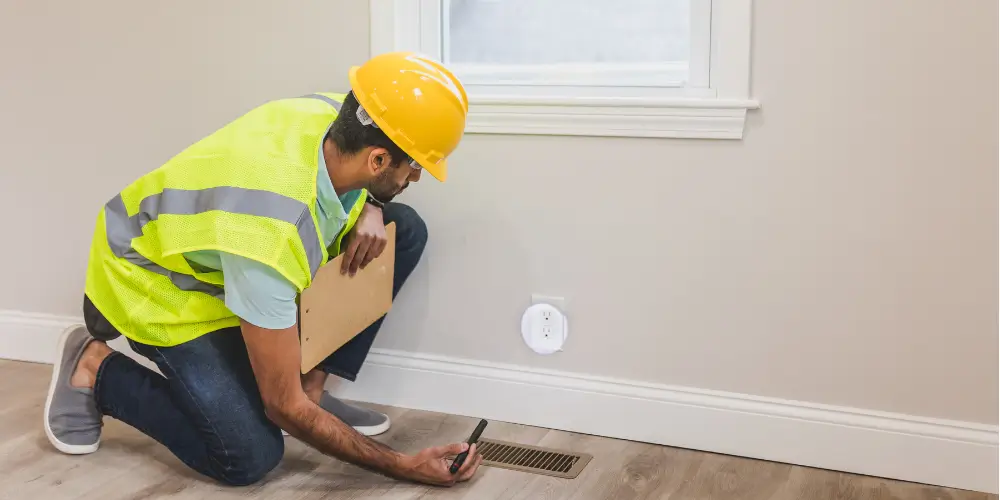
Beyond understanding individual line items on an EICR quote, landlords must factor in how property size and bedroom count directly affect cost. Larger homes simply take more time to inspect: more sockets to test, more fixed equipment to check, and more space to cover. Inspectors price that extra time and effort into their fee.
In London, where every hour of skilled labour carries a premium, a one‑bed flat will almost always be cheaper to certify than a sprawling four‑bed townhouse. Additional bedrooms usually mean more installed electrical accessories and more rooms to access and document. For landlords seeking flexibility and predictable costs, recognising this link between space, bedrooms, and inspection time allows them to budget accurately and compare quotes on realistic terms.
Number of Circuits in the Property
One often overlooked driver of EICR cost in London is the number of electrical circuits feeding the property. Each circuit must be tested, recorded and, where necessary, investigated, so a consumer unit stacked with ways naturally demands more inspector time and pushes the fee upward. Homes that have been adapted to support flexible living; home offices, studios, workshops, EV chargers, often accumulate extra circuits that quietly expand the scope of the report.
Key cost implications of circuit count include:
- More individual tests and instrument readings
- Additional documentation and certificate entries
- Longer fault‑finding where issues appear
- Possible need to access more areas and isolation points
- Extended onsite time, often triggering higher labour charges
Age and Condition of the Wiring
Age and condition of the wiring sit at the heart of EICR cost in London, often dictating how long an inspection will take and how much remedial work is flagged. Older cabling, brittle insulation, or signs of heat damage all push the electrician to test more cautiously and record more observations, increasing both time on site and paperwork.
Age is not the only factor; visible deterioration, DIY alterations, and previous partial upgrades can all complicate testing. A quick guide:
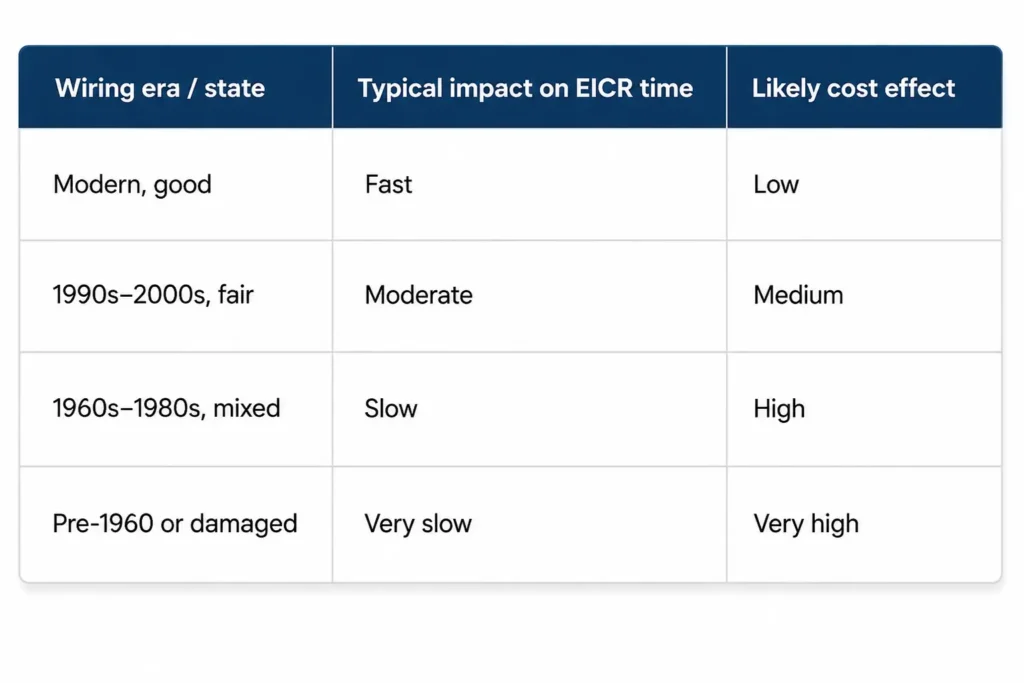
This is where hidden risk usually sits and where invoices grow.
Consumer Unit Type
Consumer unit type is another major lever on EICR cost in London, because it determines both how complex testing will be and how much any upgrades might run. Older fuse boxes and mixed‑brand boards usually demand more investigative time, while modern metal-clad boards with clear labelling can speed inspection and cut labour. The price impact flows from how easily the electrician can trace, isolate, and test every circuit safely.
- Older rewirable fuse boards often trigger higher-code observations and upgrade recommendations.
- Plastic consumer units in certain locations may require replacement with metal units.
- Split-load boards with limited RCD protection can necessitate added devices.
- High-spec RCBO boards streamline fault-finding but cost more to modify.
- Poorly labelled or crowded boards increase testing time and invoice totals.
Out of Hours EICR Inspection Fees
Flexibility in scheduling comes at a premium when arranging EICR inspections in London outside standard working hours. Contractors typically apply uplifted rates for evenings, nights, weekends, and bank holidays, reflecting overtime pay, travel constraints, and limited staff availability. For clients who value autonomy over their timetable, this can be worthwhile, but it noticeably raises the overall EICR cost.
Fees are usually structured as either a flat out-of-hours surcharge added to standard EICR pricing, or an increased hourly rate with a minimum call-out period. Larger or more complex properties may feel this impact more sharply, as longer inspections multiply premium hours. Those seeking cost control can minimise out-of-hours time by consolidating access, clearing rooms in advance, and agreeing defined time windows.
Unsatisfactory EICR and Remedial Work
When an EICR in London is graded as “unsatisfactory,” it signals that one or more electrical defects are significant enough to require remedial work before the installation can be considered safe and compliant. This is the point where costs can escalate and choice really matters. A focused schedule of remedial work restores safety, but also determines how far a property owner can future‑proof the installation and reduce repeat disruption.
Key price drivers include:
- Number and severity of C1, C2, and FI-coded items
- Accessibility of wiring, boards, and accessories
- Need to upgrade consumer units or add RCD/RCBO protection
- Extent of rewiring versus localised repairs
- Requirement for follow‑up testing and issue of a new report
VAT, Callout Fees
An often‑overlooked element of EICR pricing in London is the impact of VAT and callout fees on the final invoice. Many headline prices exclude VAT, so the real cost jumps by 20% at payment stage. For anyone wanting control over their budget, confirming whether a contractor is VAT‑registered and if the quoted figure is inclusive becomes essential.
Callout fees can also restrict flexibility. Some firms charge a flat fee simply to attend, then layer the EICR cost on top, particularly for evening or weekend visits. Others blend callout and inspection into a single rate, which may be better value. Understanding how VAT and callout fees are structured allows clients to compare quotes fairly and avoid paying for avoidable extras.
What Should Be Included in the Quote?
Before agreeing to an EICR in London, a clear written quote should itemise exactly what is included in the price: the number of circuits covered, the type of property, the scope of testing, and any limits or exclusions. This lets the client see what they are paying for and avoid opaque extras that restrict choice.
A transparent quote will normally specify:
- Fixed price for inspection and testing, plus any hourly rates if applicable
- Inclusion or exclusion of minor remedial works during the visit
- Cost of the final certificate and any additional copies or formats
- Charges for revisits after remedial work by others, if required
- Time limits, cancellation terms, and whether parking or congestion charges are added
Such clarity helps people compare providers and choose freely.

How Landlords Can Keep EICR Costs Down
Controlling EICR costs in London starts long before an electrician arrives at the property. Landlords who value flexibility can trim expenses by keeping paperwork, access, and electricity in order. Clear records of previous reports and alterations prevent duplicated work. Unobstructed consumer units, labelled circuits, and accessible sockets shorten testing time and reduce labour charges.
Regular light‑touch maintenance also helps. Replacing cracked sockets, damaged flexes, or missing faceplates beforehand means fewer remedial items at “EICR rates”. Choosing realistic testing intervals, based on property use and past findings, avoids both over‑testing and last‑minute panic bookings.
| Action | Cost-Saving Effect |
| Tidy and clear access routes | Cuts time on-site, lowers labour fees |
| Label fuse boards and circuits | Speeds testing, avoids investigative work |
| Fix minor defects in advance | Reduces remedial costs after the report |
Book Your EICR With Landlord Safety Cert
Booking an EICR with Landlord Safety Cert gives London landlords a clear, fixed‑price route to compliance without guesswork. Instead of wrestling with variable quotes and hidden extras, they can secure transparent costs and a rapid turnaround that keeps tenancies moving and void periods short. Check EICR test procedure.
Landlord Safety Cert structures the process so owners stay in control of both time and budget:
- Fixed, upfront pricing tailored to property size, not vague “from” estimates
- Qualified, insured electricians familiar with London borough requirements
- Digital certificates delivered quickly for seamless tenant onboarding
- Clear remedial quotes only where genuinely necessary, avoiding gold‑plating
- Flexible booking slots that minimise disruption to existing occupiers
Frequently Asked Questions
How Often Should an EICR Be Renewed for Different Types of Properties?
EICRs are typically renewed every 10 years for owner‑occupied homes, 5 years for rented or commercial properties, and 3 years or less for higher‑risk venues, or at change of tenancy, ownership, or after major alterations.
Who Is Legally Responsible for Arranging EICRS in Shared or HMO Properties?
In shared or HMO properties, the legal duty to arrange EICRs normally falls on the landlord or person in control of the property, not the tenants, ensuring electrics are safe, certified, and regularly inspected.
Can Tenants Request a Copy of the EICR Report, and How Quickly?
Tenants can request a copy at any time; the landlord must supply it within 28 days of the inspection, or within seven days if requested by the local authority, empowering tenants to understand and challenge unsafe electrics.
Are There Penalties for Not Having a Valid EICR in London Rentals?
Yes. Landlords without a valid EICR face enforcement notices, fines up to £30,000, and potential banning orders. Councils can demand urgent remedial works, restrict renting activity, and use non‑compliance as evidence in wider licensing or safety actions.
How Do I Verify My Electrician Is Qualified to Carry Out EICRS?
They independently check the electrician holds current NICEIC, NAPIT or ELECSA registration, City & Guilds 2391 or equivalent, valid public liability insurance, and can show sample EICRs, reviews, and identity, confirming competence and accountability.
Conclusion
In conclusion, EICR costs checklist in London vary widely depending on property size, number of circuits, and the age and condition of the wiring, as well as VAT and potential callout fees. Landlords should verify quotes clearly list what is included, from testing scope to certification and any remedial estimates. By comparing detailed quotes and maintaining their electrical installations, landlords can keep long-term costs down and verify compliance, especially when using specialist providers like Landlord Safety Cert.