



An EICR test procedure is a structured inspection and testing of a property’s fixed wiring to check safety and legal compliance. An electrician visually inspects consumer units, sockets and wiring, then carries out tests such as continuity, insulation resistance and RCD operation. Results are recorded using codes (C1, C2, C3, FI) and an overall pass/fail. Landlords typically must repeat this at least every five years, and the following sections explain each stage of the process in more detail.
Key Takeaways
- Confirm the legal duty and testing interval, and gather previous EICRs and access info before the visit.
- Ensure safe access to all circuits and equipment, clearing furniture and providing keys or codes.
- An electrician performs a visual inspection of consumer units, sockets, switches, lights, and earthing.
- Electrical tests check continuity, insulation, earth fault loop, and RCD trip times.
- Results are recorded, codes are assigned, an EICR is issued, and any remedial work is arranged in accordance with legal requirements.
Table of Contents
What an EICR Test Involves
An EICR test procedure involves a systematic inspection and testing of a property’s fixed wiring to assess its safety and compliance with current regulations. The electrician visually inspects consumer units, circuits, protective devices, and accessible wiring for damage, wear, or poor artistry. They note signs of overheating, incorrect cable types, and inadequate labelling.
Next, they conduct tests using calibrated instruments. These include continuity tests to confirm conductors are correctly connected, insulation resistance tests to check cable integrity, and earth fault loop impedance tests to verify disconnection times. RCDs are tested to guarantee they trip fast enough under fault conditions. Findings are recorded as observations, each given a classification code and accompanied by recommendations for remedial work.

Legal Requirements for EICR Testing in the UK
Property owners and landlords must also understand when such testing is legally required in the UK. The key legislation is The Electrical Safety Standards in the Private Rented Sector (England) Regulations 2020, which make EICRs mandatory for most privately rented homes.
Landlords in England must ensure a valid EICR is in place at least every 5 years, or sooner if the report recommends a shorter interval. A copy must be given to new tenants before they move in, and to existing tenants within 28 days of the inspection. Similar duties apply, with some variation, in Scotland and Wales. Homeowners are not usually legally obliged, but insurers or local authorities may effectively require testing.
Preparing Your Property for an EICR Test
Properly preparing a property before an EICR helps the electrician work efficiently and reduces the risk of delays or incomplete testing. Before the visit, the landlord or homeowner should confirm access to all areas containing electrical equipment, including lofts, basements, garages, and outbuildings. Keys, alarm codes, and gate fobs should be available.
Furniture and belongings ought to be moved away from sockets, consumer units, and fixed appliances so the electrician can reach them without obstruction. Where possible, occupants should unplug non-essential equipment and clearly identify any critical devices that must remain powered. Any previous electrical paperwork, such as old EICRs, installation certificates, or details of recent work, should be gathered in advance to help the electrician understand the existing installation.
Visual Inspection: What Electricians Look For
Visual inspection forms the starting point of any EICR test procedure, allowing the electrician to spot obvious defects before testing begins. During this stage, they walk through the property, examining the visible parts of the electrical installation without removing fixed wiring.
They check the consumer unit (fuse board) for damage, signs of overheating, missing covers, and correct the circuit labelling. Sockets, switches, and light fittings are inspected for cracks, loose fixings, scorch marks, and evidence of past DIY alterations. The electrician also looks for cables run unsafely, such as trailing across floors, pinched in doors, or exposed where they could be damaged.
Additionally, they note the presence and condition of bonding and earthing connections, as well as any obvious non-compliance with current wiring regulations.
Electrical Testing: Tools and Techniques Used
After the visual inspection highlights any obvious issues, attention turns to instrument-based testing to confirm the installation’s actual condition. The electrician typically uses a multifunction tester, which can perform several key checks safely and accurately once circuits are isolated where required.
Insulation resistance tests assess whether cable insulation is sound or deteriorating, helping to reveal hidden damage or moisture ingress. Continuity tests confirm that protective conductors and ring final circuits are complete and correctly connected. Earth-fault loop impedance measurements verify that, in the event of a fault, sufficient current will flow to operate protective devices quickly. RCD tests measure how fast and at what current residual current devices trip, confirming they provide adequate protection against electric shock and fire.
Recording Results and Assigning Codes
Once testing is complete, the electrician must methodically record each result and apply the correct observation code. Every measured value, such as continuity, insulation resistance, and RCD trip time, is entered on the EICR form, along with the circuit reference and location. Readings are compared with current BS 7671 requirements to determine whether they are satisfactory.
Where an issue is identified, a standard code is assigned: C1 for immediate danger, C2 for potentially dangerous defects, C3 for improvements recommended, and FI for further investigation. These codes provide a clear risk language for landlords and homeowners. The overall outcome of the report, “satisfactory” or “unsatisfactory”, is then based on the most serious codes recorded.
Common Findings During EICR Tests
Inspectors often find worn materials, old protective devices, and modifications made without proper electrical expertise. These findings help landlords and homeowners visualise hidden risks within walls, ceilings, and consumer units.
Typical issues include:
- Cracked or perished cable insulation, especially in older rubber or fabric-sheathed wiring.
- Consumer units lacking modern RCD protection leave circuits vulnerable to electric shock hazards.
- DIY additions, such as extra sockets or lights, using incorrect cable types or loose terminations.
- Signs of overheating at accessories or in the consumer unit are often visible as discoloration, scorching, or melted plastic.
Remedial Actions After an EICR Test
Logically interpreting the findings of an EICR is essential before any tools are brought out or cables are disturbed. The report’s coding system guides priorities: C1 demands immediate disconnection or repair, C2 requires urgent remedial work, C3 suggests improvements, and FI calls for further investigation. A qualified electrician should map each code to a clear action plan and timescale.
Key response priorities can be summarised as:
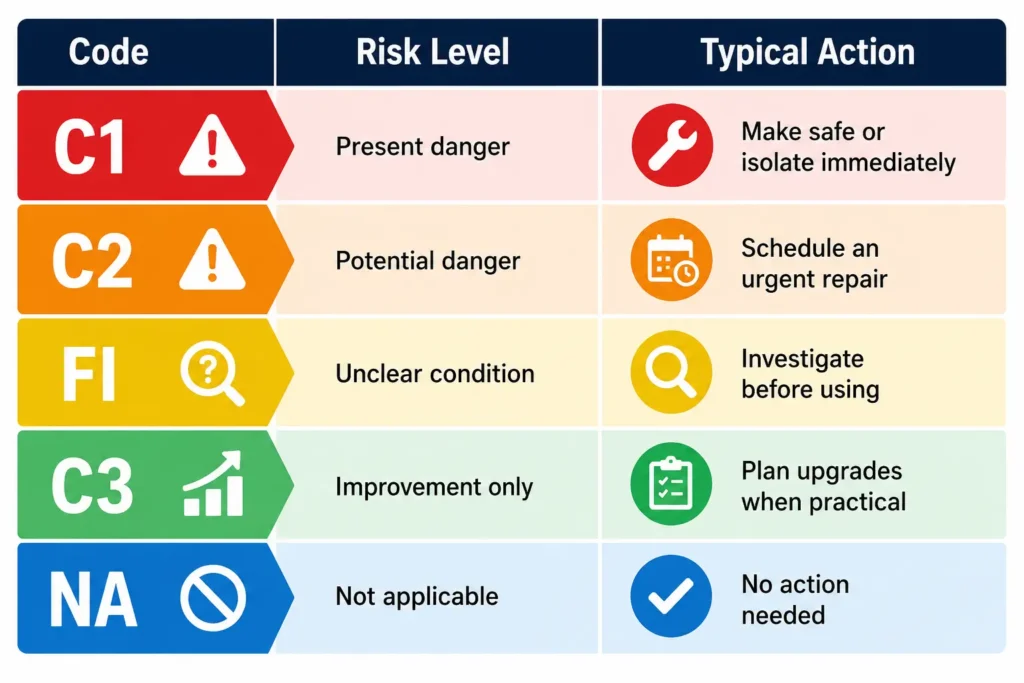
After completion, documentation should confirm compliance and next inspection dates.
Frequently Asked Questions
How Much Does an EICR Typically Cost for Different Property Sizes?
Costs vary, but typically: one-bedroom flats £120–£180, two–three bed houses £150–£220, larger homes £200–£350+. Prices depend on the region, the electrician’s qualifications, board complexity, and any remedial work identified during the inspection.
How Long Does an EICR Test Usually Take to Complete?
An EICR test usually takes 1–4 hours. A small flat may need about 1–2 hours, an average house 2–3 hours, and larger or older properties with complex wiring can take longer.
How Often Should Landlords and Homeowners Renew Their EICR Certificates?
They should typically renew EICR certificates every 5 years, or sooner if the report recommends it. Landlords must also renew at each change of tenancy. Regular renewal helps guarantee ongoing electrical safety and legal compliance.
Can Tenants Remain in the Property While the EICR Test Is Carried Out?
Tenants can usually remain in the property during an EICR. The electrician may briefly switch off circuits, causing temporary power loss. Access to all rooms, sockets, and the consumer unit is required, so minor disruption and coordination are expected.
How Do I Choose a Qualified and Accredited Electrician for an EICR?
They should verify the electrician is registered with NICEIC, NAPIT, or similar competent person schemes, holds valid public liability insurance, and can show recent EICR experience, positive reviews, clear written quotes, and clear explanations of findings.
Conclusion
An EICR test procedure offers homeowners and landlords clear insight into the condition and safety of their electrical installations. By understanding the process, legal obligations, and common findings, they can better prepare their properties and respond to any identified issues. Regular inspections, prompt remedial work, and accurate record-keeping help guarantee compliance, reduce the risk of electrical faults or fires, and provide peace of mind for occupants, owners, and future tenants alike.