


A gas safety certificate checklist helps UK landlords prepare for a smooth, compliant inspection. They should review previous gas safety records, confirm all gas appliances, flues, meters and pipework are accessible, and check appliances look stable and undamaged. Ventilation and air supply areas must be clear, with any known faults or past advisories addressed. Landlords also need property details, documents and repair evidence ready. Understanding these steps in more detail can make fulfilling legal duties much easier.
Key Takeaways
- Gather previous Gas Safety Records, appliance manuals, and full property details, ensuring annual inspection dates have not been missed.
- Confirm all gas appliances, flues, meters, and visible pipework are identified and fully accessible, with keys and access codes ready.
- Visually check appliances for stability, cleanliness, obvious damage, and makeshift repairs, clearing clutter and flammable items from surrounding areas.
- Ensure adequate ventilation and safe flue terminations are visible, with no blocked vents, capped flues, or sealed-off access panels.
- Prepare to receive, store, and share the new Gas Safety Record, keeping it for at least two years and providing copies to tenants within legal timeframes.
Table of Contents
Check Previous Gas Safety Records
Why begin a new gas safety check without understanding the property’s history? A landlord who wants real independence from risk and bureaucracy starts by reviewing past gas safety records. These documents reveal patterns: repeated advisory notes, past failures, and any limits placed on appliance use. By checking dates, they confirm the annual inspection cycle has not been broken, protecting both lawful let and tenant safety.
Previous records also show who carried out the work and whether they were properly registered at the time. This gives the landlord leverage to challenge poor workmanship and avoid repeating expensive mistakes. Notes on access issues or tenant refusals help them plan inspections with fewer conflicts and delays. When records are missing, inconsistent, or incomplete, that gap signals the need for closer scrutiny, extra time before inspection, and possibly fresh documentation to restore a clear, defensible compliance trail.
Confirm Gas Appliances and Flues Are Ready
Before the engineer arrives, each gas appliance and its connected flue should be identified, accessible, and in a condition that allows safe inspection. A landlord who values flexibility guarantees the engineer can move through the property without delay or obstruction. That means knowing exactly how many gas appliances are installed, where they are located, and which flues serve each one.
Duplicate, or disconnected appliances should be clearly noted so time is not wasted investigating unused equipment. Access panels, cupboards, and ceiling hatches that conceal flues or pipework should open easily, without tenants’ belongings blocking the way. Any keys, security codes, or special instructions needed to reach appliances or flues must be organised in advance.
Ensure Gas Appliances Are Safe to Inspect
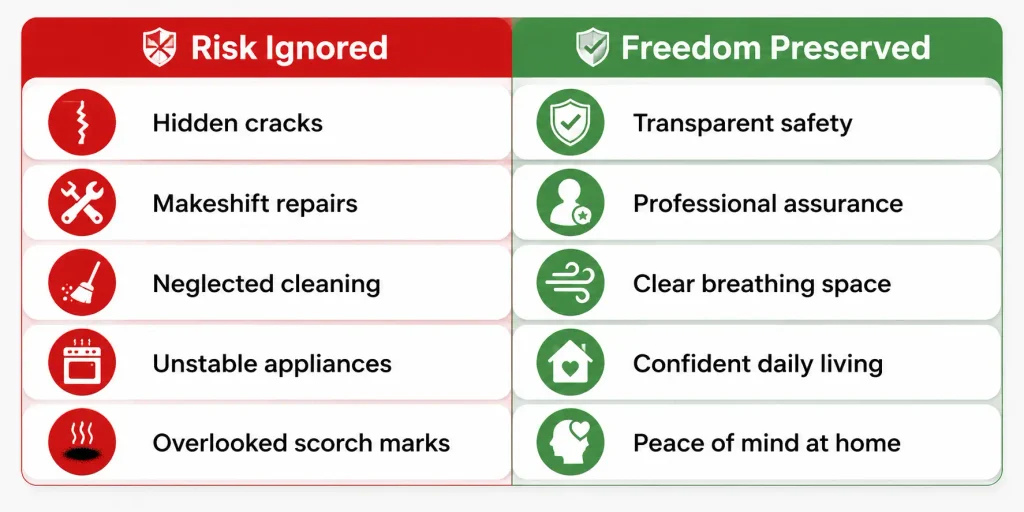
Ensuring gas appliances are safe to inspect means confirming they are stable, clean, and free from obvious hazards that could interfere with testing. A responsible landlord removes loose objects, checks for visible corrosion, and verifies that appliances are firmly fixed so the engineer can work without restriction. Any signs of scorching, damaged casings, or makeshift repairs should be addressed before inspection, protecting both occupants and the validity of the certificate.
Inspectors must be able to approach each appliance without risk from trailing flexes, clutter, or unstable fittings. Simple visual checks support a smoother visit and reduce the chance of follow‑up appointments or enforcement action.
Clear Access to Gas Meters and Pipework
Although often overlooked, clear access to gas meters and pipework is essential for a compliant and efficient safety inspection. An engineer must be able to reach the meter, isolation valves, and visible pipework without moving heavy furniture, stored belongings, or built-in panels. If access is obstructed, the inspection may be delayed, limited, or marked “at risk,” restricting a landlord’s freedom to let or manage the property as planned.
Landlords are expected to guarantee that cupboards, meter boxes, and risers are accessible and safely reachable. Any boxing-in of pipework should include removable panels so that joints and connections can be inspected. Where meters are located in external cabinets, keys or codes should be provided in advance.
Check Ventilation and Air Supply Areas
Adequate ventilation and a reliable air supply are critical for the safe operation of gas appliances, preventing the build-up of combustion products and carbon monoxide. Before inspection, a landlord should confirm that every room with a gas appliance has sufficient permanent ventilation, in line with the appliance manufacturer’s instructions and current regulations.
They should walk the property and verify vents, air bricks, and louvred doors are unobstructed by furniture, curtains, or tenant belongings. Bathroom and kitchen extract fans should operate correctly, without reducing the air needed for open-flued appliances such as older boilers or gas fires.
Key checks include:
- Verifying purpose-made vents are the correct size and free from paint, tape, or debris
- Confirming no one has sealed gaps, chimneys, or flues that were designed to supply combustion air
- Checking that window trickle vents and easily opened windows are available where additional air is required
Arrange Access for the Gas Safe Engineer
Once ventilation and air supply have been checked, attention turns to making the property accessible for the Gas Safe engineer. Landlords who want minimal disruption and maximum flexibility usually start by agreeing a clear appointment window with both the engineer and the tenants. Confirming whether keys will be collected, dropped off, or handed over in person avoids last‑minute complications.
Access to every gas appliance and meter must be unrestricted. Furniture, stored items, or temporary fittings that block boilers, fires, or pipework should be moved in advance so the engineer can work quickly and leave just as quickly.
Where tenants value privacy, landlords often give written notice well ahead of the visit, explaining why access is legally required and how long it should take. For multi‑unit buildings, arranging concierge or agent key access can reduce repeated visits and give everyone more freedom over their own time.
Prepare Property Details and Documents
Gathering accurate property information and documentation helps the Gas Safe visit run efficiently and protects the landlord’s legal position. Before inspection, a landlord benefits from having a clear snapshot of the property and its gas setup so the engineer can work quickly, without chasing missing details.
Key documents and details typically include:
- Property identifiers – full address, flat or room numbers, and landlord or agent contact details, to guarantee paperwork is correctly issued.
- Appliance and installation information – locations and make/model of boilers, gas fires, cookers, and meters, plus any manuals that may assist the engineer.
- Previous gas records – last Gas Safety Certificate, any recent service reports, and notes of tenant concerns or reported issues.
Complete Outstanding Gas Safety Repairs
Addressing any known gas-related defects before the inspection reduces the risk of a failed certificate and protects occupants from avoidable hazards. A landlord who values freedom from last‑minute stress will guarantee all repairs are completed early, rather than relying on the engineer to discover problems on the day. They first review previous gas safety records, service reports, and tenant communications for any flagged issues: weak flame patterns, intermittent boiler lockouts, gas odour complaints, or poor ventilation. Any identified fault is then passed to a Gas Safe registered engineer, not a general handyman, to diagnose and rectify.
Common repairs include replacing damaged flues, fixing leaking pipework, servicing or replacing faulty gas valves, and repairing or upgrading unsafe appliances. Landlords also confirm that any disused gas appliances are safely capped off. Documented evidence of completed repairs gives them confidence that the property is compliant, safe, and ready for formal assessment. Find more Landlord Gas Safety Responsibilities Explained: Rules, Duties and Requirements

What Happens During the Gas Safety Inspection?
With repairs completed and records in order, the focus moves to the formal gas safety inspection itself. A Gas Safe registered engineer arrives with a clear brief: verify that every gas appliance and flue operates safely and efficiently, without limiting a tenant’s freedom to live as they choose in the space.
They typically move systematically through the property, checking appliances, pipework, and ventilation. Burners, ignition, and flame quality are examined, as are safety devices such as flame‑failure devices and thermostats. The engineer also confirms that appliances are correctly installed, suitably located, and not at risk of blocking exits or restricting use of rooms.
Key actions usually include:
- Testing gas soundness to confirm there are no leaks in the system.
- Measuring appliance operating pressure and combustion performance.
- Confirming adequate ventilation and safe flue termination for all appliances. Here is the detailed guide: What Happens During a Gas Safety Inspection? Checks, Process and Requirements
Receiving and Keeping the New Gas Safety Record
Once the inspection is complete and all findings are confirmed, the landlord receives a new Gas Safety Record documenting the outcome. This record lists each checked appliance, the engineer’s details and Gas Safe number, identified defects, and confirmation that the installation is safe, or what must be done to make it safe.
To stay compliant while keeping options open, the landlord keeps a copy for at least two years, in digital or paper form. Many choose secure cloud storage so they can access it instantly from anywhere and share it with agents or contractors without delay.
A copy must be given to existing tenants within 28 days and to new tenants before they move in. If the record includes recommendations, landlords schedule remedial work promptly and keep evidence of repairs alongside the certificate, creating a clear, portable safety trail that supports flexible property management. Check out the Common Reasons a Property Fails a Gas Safety Inspection: UK Landlord Guide
Frequently Asked Questions
Do I Need a Gas Safety Certificate for a Room I Also Live In?
Yes, if part of the property is rented out, a gas safety certificate is required even if the landlord lives there. Live-in landlords still must protect tenants’ freedom to feel safe from gas leaks and carbon monoxide.
How Often Must Gas Safety Certificates Be Renewed for HMOS or Student Lets?
They must be renewed every 12 months for HMOs and student lets. Annual checks by a Gas Safe engineer keep appliances legal, protect tenants’ right to safe homes, and provide paperwork landlords need for compliance and enforcement.
Are Gas Safety Checks Required for Properties That Are Currently Vacant?
Yes, checks remain required if gas appliances are installed and may be used, even when vacant. The legal duty applies continuously, ensuring safety before new occupants move in, with annual certificates maintained and records kept available for inspection.
Can Tenants Legally Refuse Access for a Scheduled Gas Safety Inspection?
Tenants can refuse access, asserting their right to quiet enjoyment, but landlords must show “all reasonable steps” to arrange entry. Persistent refusal risks legal action, potential eviction grounds, and jeopardises safety compliance, not criminalising the tenant directly. Here is the detailed answer to Can a Tenant Refuse a Gas Safety Inspection? Legal Requirements Explained
What Penalties Can Landlords Face for Not Having a Valid Gas Safety Certificate?
Under Regulation 36 of the Gas Safety (Installation and Use) Regulations 1998, landlords must arrange annual gas safety checks and keep the required records. Failure to comply can lead to enforcement action, criminal prosecution, fines, and potentially imprisonment, depending on the seriousness of the breach.
Conclusion
By following a clear gas safety certificate checklist, UK landlords can approach inspections with confidence and efficiency. Ensuring appliances, meters, pipework, and ventilation are accessible and compliant helps engineers work quickly and thoroughly. Keeping accurate records, completing repairs promptly, and understanding what happens during the inspection all contribute to safer homes and legal compliance. Ultimately, thorough preparation supports tenant safety, protects property investments, and makes passing each annual gas safety check more straightforward.