

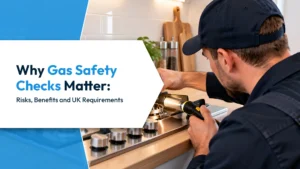

What happens during a gas safety inspection? During a gas safety inspection, a Gas Safe registered engineer checks boilers, hobs, fires, heaters, and visible pipework for safe installation and operation. They test safety controls, assess gas pressure, and inspect flues and ventilation for blockages or poor airflow. Any unsafe findings are explained, appliances may be disconnected, and a Gas Safety Record or warning notice is issued. Legal duties, repair options, and typical inspection times are outlined so the full process and requirements become clear next.
Key Takeaways
- A qualified Gas Safe registered engineer inspects all gas appliances, pipework, flues and ventilation to ensure they are installed and operating safely.
- The engineer checks appliance casings, burners, flues, connections and safety controls, testing shut-off and overheat devices against manufacturer specifications.
- Flues, chimneys and ventilation openings are examined for blockages, damage and adequate airflow to prevent risks such as carbon monoxide buildup.
- Any unsafe or at-risk appliances are clearly explained, classified, and may be disconnected, with recommendations for repair, isolation or replacement.
- You receive written documentation (e.g., Gas Safety Record/CP12 and warning notices) summarizing findings, legal implications and any required remedial actions.
Table of Contents
What Happens During a Gas Safety Inspection?
During a gas safety inspection in London, a qualified Gas Safe registered engineer systematically examines all gas appliances, pipework, and ventilation to verify they are operating safely and efficiently. The visit is structured to minimise disruption and give the occupant clear, factual insight into the state of their system, without pressure or unnecessary extras.
The engineer first confirms their Gas Safe ID, explains what the inspection includes, and gains access to relevant areas. They visually assess the installation layout, accessibility, and general condition of gas infrastructure throughout the property. Ventilation routes and flues are viewed to ascertain combustion products can disperse freely, without creating hidden constraints or build-ups. Readings, observations, and any immediate safety concerns are noted for the record. At the end, the engineer outlines findings in plain language, confirms whether the installation is compliant, and issues appropriate documentation that supports informed, independent decisions about the property.

Checking Gas Appliances and Connections
Once the overall inspection routine is outlined, attention moves to the detailed checking of gas appliances and their connections. The engineer looks at each boiler, hob, fire, or heater to confirm it is installed in line with current regulations and manufacturer guidance. They visually assess casing, burners, flues, and visible pipework, judging whether the setup respects the user’s right to operate equipment without hidden risk.
They then examine gas pipe connections for tightness, correct materials, and appropriate support. Flexible hoses, isolation valves, and joints are checked for age, damage, corrosion, or signs of strain that might restrict how the space is used. Ventilation openings around appliances are confirmed as clear and adequately sized, so combustion can remain stable. Any unsafe modification, DIY alteration, or makeshift connector is noted, since these can undermine both legal compliance and the occupant’s freedom to use the property confidently and without interruption.
Testing Gas Appliance Safety Controls
The engineer methodically checks flame‑supervision devices, overheat thermostats, pressure switches, and automatic shut‑off valves to confirm they cut the gas supply the moment something strays from safe limits. These controls protect occupants’ freedom to use gas confidently, without hidden risk building in the background.
Each control is triggered in a controlled manner: burners are lit and extinguished, thermostats are driven to their limits, and lockout functions are activated to see whether the appliance refuses to operate until the fault is cleared. Response times are compared with manufacturer specifications and relevant standards. Any control that reacts slowly, intermittently, or not at all is recorded as unsafe. The engineer then advises that the appliance be repaired or isolated, preventing unreliable safety mechanisms from being relied upon.
Inspecting Flues and Ventilation
With the appliance safety controls verified, focus moves to how combustion products are removed and fresh air is supplied. The engineer examines flues, chimneys, and terminals to confirm they are continuous, unblocked, and correctly routed to the open air. They look for corrosion, loose joints, damage, or DIY alterations that could leak fumes back into living spaces, restricting a household’s freedom to use gas without worry.
Balanced and open flues are checked for tight seals and proper clearances from windows, vents, and neighboring properties. Where accessible, terminals are inspected outside to ascertain they are not obstructed by foliage, cages, or stored items. Ventilation grilles, air bricks, and dedicated vents are then assessed. The inspector confirms they are permanently open, sized to current standards, and not painted over, taped, or covered by furniture. Any shortfall is highlighted, as poor ventilation raises the risk of carbon monoxide and stifles safe, independent use of gas appliances.
Checking Gas Pressure and Appliance Operation
Next in the inspection comes verification of gas pressure and how each appliance actually runs under normal use. The engineer connects a calibrated manometer or digital gauge to test points on the installation pipework and appliances. They compare standing and working pressures with manufacturer data and relevant standards, confirming the supply can support every burner without strain or drop-off. They then observe each appliance in operation, checking ignition, flame shape, response to controls, and shut-down behavior. This confirms the system delivers reliable heat while staying within safe performance limits, letting occupants use their homes or businesses freely without hidden constraints.
Key elements often include:
- Measuring standing, working, and burner pressures against specified ranges
- Confirming appliances light cleanly and burn with stable, well-defined flames
- Testing thermostats, safety devices, and user controls for accurate response
- Ensuring simultaneous operation of multiple appliances doesn’t compromise pressure
Identifying Gas Safety Defects
Although the system may appear to be working normally, a key role of the inspection is to uncover defects that could compromise safety now or in the near future. The engineer looks beyond basic operation, searching for hidden weaknesses that could limit a person’s ability to use their home or workspace freely and confidently.
They check for gas leaks at pipe joints, valves, and appliance connections using approved detection methods. Flue routes and terminals are examined for damage, obstructions, or poor positioning that could allow combustion products to spill indoors. Ventilation openings are assessed to confirm they are adequate and unobstructed. Burner flames, heat exchangers, and seals are inspected for signs of incomplete combustion, overheating, or corrosion. The engineer also looks for incorrect pipework sizing, unsupported pipe runs, and unsafe modifications. Each defect is judged by its potential to allow dangerous gas escape, fumes, or fire, even if no incident has yet occurred.
Completing the Gas Safety Record
Once defects have been identified and safety checks completed, the findings must be recorded in a clear and structured Gas Safety Record under the Gas Safety (Installation and Use) Regulations 1998. This document becomes the written proof that appliances, pipework and flues were checked in line with legal and technical standards, allowing owners and landlords to use their space without uncertainty or guesswork.
The engineer notes appliance locations, test results, and any identified defects, using precise language that can be understood without specialist training. Dates, signatures and registration details anchor the record to a specific visit, preventing disputes later.
A properly completed record typically includes:
- Appliance details, test results and confirmation of safe operation
- Location and condition of flues, chimneys and ventilation paths
- Gas tightness test outcomes and meter details where applicable
- Clear classification of any issues and confirmation the user was informed
Copies are then provided to the responsible person, supporting informed, independent decisions about the property.
What Happens If Issues Are Found?
When faults or safety concerns are identified during a gas inspection, the engineer shifts immediately from routine checking to risk management. The focus moves to understanding how serious the defect is, how quickly it could become dangerous, and what level of control the occupant still has over the situation. Each issue is classified according to risk, using clear categories that distinguish between imminent danger and developing problems. This classification guides how firmly an engineer must advise against use, or whether limited, cautious use may still be possible until remedial work is arranged.
The engineer explains the problem in plain, direct terms: what is unsafe, why it matters, and what could realistically happen if it is ignored. Any limitations on using specific appliances or parts of the system are stated without ambiguity, so the occupant can make informed choices about balancing safety with day‑to‑day independence in the property.
Actions After a Failed Inspection
A failed gas safety inspection triggers a clear sequence of next steps, focused on removing or controlling risk as quickly as possible. Once an appliance or installation is unsafe, the engineer typically classifies it and may disconnect or isolate it immediately. This protects occupants while preserving their freedom to decide how and when to remedy the problem.
The engineer then explains the findings in plain terms and issues written documentation outlining defects, legal implications, and the conditions under which the system can or cannot be used. From there, the responsible person can choose how to proceed, provided minimum safety duties are met:
- Arrange repair or replacement with a qualified Gas Safe engineer
- Seek a second opinion if they doubt the recommendations
- Prioritise work based on risk level and budget
- Plan temporary alternatives for heating, hot water, or cooking until repairs are complete

How Long Does the Inspection Take?
After understanding what happens if an installation fails, attention naturally turns to how long a routine gas safety inspection is likely to take. For most standard homes with a typical boiler, hob and perhaps a gas fire, the visit usually lasts between 30 and 60 minutes. This assumes easy access to appliances, clear routes to meters and flues, and no complex fault‑finding.
In larger properties, or where there are multiple appliances, such as additional gas fires, water heaters or range cookers, the inspection can stretch to 90 minutes or more. Older systems, tight cupboards, high flues or appliances spread over several floors can also extend the visit. If the engineer discovers problems that demand immediate remedial work, time on site increases. While this may feel inconvenient, the extra minutes protect occupants’ safety and support the freedom to use gas appliances with confidence rather than concern.
Documents Provided After the Inspection
Every completed gas safety inspection results in specific paperwork that records the engineer’s findings. These documents give the property owner the freedom to prove compliance, challenge poor workmanship, or change providers if standards slip. The exact paperwork depends on the type of inspection and whether the engineer is Gas Safe registered.
Typically, the engineer issues a record that includes appliance details, test results, and any unsafe findings. Where legal duties apply, such as in rented properties, the documentation is essential evidence that appliances have been checked properly and on time.
Common documents include:
- Gas Safety Record / CP12, confirming inspections, outcomes and next due date
- Warning or “Immediately Dangerous” notice, if an appliance must be disconnected
- Work summary or invoice, outlining any remedial work completed or recommended
- Digital report or certificate, often emailed, allowing easy storage, sharing and renewal reminders
Frequently Asked Questions
How Often Should Landlords Arrange Gas Safety Inspections for Rental Properties?
Landlords must arrange gas safety inspections at least once every 12 months. This yearly rhythm protects tenants’ freedom to live safely, guarantees legal compliance, and keeps appliances, flues and pipework functioning without hidden risks or oppressive surprises.
Can Tenants Refuse Access for a Scheduled Gas Safety Inspection?
Tenants can refuse access, asserting their autonomy, but landlords must show they took all reasonable steps to comply. Persistent refusal may risk tenancy or legal action; dialogue, alternative appointments, and written records usually protect both freedom and safety.
Are Gas Safety Inspections Legally Required for Homeowners, or Only Landlords?
They are only legally required for landlords, not ordinary owners‑occupiers. Homeowners choose inspections voluntarily for safety and peace of mind, while landlords must obtain annual Gas Safety Certificates for all rental properties under UK law.
How Much Does a Typical Gas Safety Inspection Cost in London?
A typical gas safety inspection in London usually costs £60–£120, depending on property size and engineer. Prices rise with extra appliances or emergency timing, so individuals often compare independent engineers, avoid agency mark-ups, and negotiate flexible appointment windows.
Do New Gas Appliances Still Need Inclusion in the Annual Gas Safety Check?
Yes, new gas appliances still need inclusion in the annual gas safety check; freedom-loving tenants and landlords retain full choice over use, yet legal safety obligations and certification demands do not exempt recently installed or rarely used equipment.
Conclusion
Concluding “What happens during gas safety inspection”, A gas safety inspection through Landlord Safety Cert in London provides clear assurance that appliances, pipework, ventilation and flues are operating safely and efficiently. By systematically checking controls, pressures and emissions, engineers identify risks early and recommend appropriate remedial action. Where issues are found, prompt repairs and re‑inspection help restore compliance. With the final Gas Safety Record documenting results, both landlords and homeowners gain essential proof of safety, legal compliance and ongoing protection for occupants and property.
[…] What Happens During a Gas Safety Inspection? Checks, Process and Requirements […]