

Do gas cookers need a gas safety certificate? Gas cookers themselves do not get a separate “gas safety certificate.” However, if a landlord supplies and connects a gas cooker, it must be checked annually by a Gas Safe registered engineer and listed on the property’s Gas Safety Record, under the Gas Safety (Installation and Use) Regulations 1998. Homeowners are not legally required to have annual checks, but it is strongly advised. The next sections clarify when checks are required, what is inspected, and key safety duties.
Key Takeaways
- In rented properties, any landlord‑supplied gas cooker that’s connected to the gas supply must be included in the annual Gas Safety Certificate (CP12).
- The legal duty follows control and connection to the gas system, not ownership; advertised or provided “usable” gas cookers must be safety‑checked.
- A Gas Safe registered engineer must carry out the cooker safety check, testing installation, gas tightness, ventilation and burner performance.
- The landlord must keep written gas safety records for at least two years and give tenants a copy within 28 days of the check.
- Tenants’ own portable gas cookers are usually outside the landlord’s certificate, but fixed/plumbed‑in appliances under the landlord’s control are always covered.
Table of Contents
Gas Safety Duties Of Landlords
Landlords in the UK have clear legal duties to confirm gas cookers and all other gas appliances in their rental properties are safe, properly installed, and regularly checked. These obligations arise mainly from the Gas Safety (Installation and Use) Regulations 1998, which set boundaries on what a landlord can and cannot ignore.
They must confirm every gas appliance, flue, and associated pipework they provide is maintained in safe condition and installed by a Gas Safe registered engineer. Written evidence of compliance must be kept, and access to the property may need to be negotiated firmly but lawfully.
Tenants retain the freedom to use or refuse gas appliances, yet landlords cannot contract out of these safety duties. Clear records, transparent communication, and certified professional work protect landlords from criminal liability while giving tenants confidence that essential freedoms, like choosing how to cook and heat, do not come at the cost of safety. Read our blog post Gas Safety Check Before New Tenants Move In: London Landlord Guide

When Gas Cookers Require Safety Checks
Usually, a gas cooker in a rented property triggers a legal safety check requirement whenever it is supplied by the landlord, connected to the gas installation, and used or available for use by a tenant. The law focuses less on ownership labels and more on practical control and connection to the gas system. A cooker requires checks when it is permanently plumbed into the gas supply, whether freestanding or built‑in, and forms part of the premises offered to the tenant. If the landlord advertises or implies that the property comes with a usable gas cooker, that appliance normally falls under the annual gas safety check.
What a Gas Safe Engineer Checks
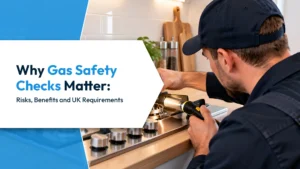
During a gas safety visit, a Gas Safe registered engineer carries out a systematic series of checks on the cooker and its gas supply to confirm it is safe for continued use. Their approach is methodical but designed to leave the user free to cook, entertain, and live without worrying about hidden risks. They visually inspect the appliance, its pipework, and any flexible hose for damage, corrosion, or amateur alterations. They then test for tightness in the gas supply, ensuring there are no leaks that could undermine safety or peace of mind.
Key checks typically include:
- Flame quality, burner performance, and ignition, confirming clean, stable combustion
- Ventilation and flue operation (where relevant), ensuring combustion products can disperse safely
- Safety devices, controls, and shut-off valves, confirming they operate reliably under normal use
Findings are documented clearly so the user can act quickly on any issues and keep their options open.
Gas Cooker Installation Requirements
Although a gas cooker may appear simple to fit, its installation must follow strict safety and building regulations to prevent fire, explosion, and carbon monoxide risks. UK rules require that any work on a gas supply, including fitting or relocating a cooker, is carried out by a Gas Safe registered engineer. This protects the user’s freedom to cook and live independently without hidden hazards.
Key requirements include correct pipe sizing, secure connection to a suitable gas outlet, and a rigid, stable location so the appliance cannot tip. Adequate ventilation must be available, with enough air for combustion and safe dispersal of heat. Clearances from combustible surfaces, cupboards, and extractor hoods must meet the manufacturer’s instructions. Where a flexible hose is used, it must be approved for gas, within date, and routed without strain or heat damage. After installation, gas soundness and burner performance must be verified.
Gas Safety Rules for Homeowners
Even when a gas cooker is installed correctly, homeowners must follow specific safety rules to keep it operating safely over time. UK regulations give owners freedom to use their appliances as they wish, but expect them to act as responsible “operators” of the gas system in their home. This means understanding basic duties and knowing when to call a Gas Safe registered engineer.
Key habits help keep control in the homeowner’s hands:
- Routine visual checks of the cooker, hose, and flame appearance, without attempting any DIY gas work.
- Maintaining clear ventilation, keeping vents and extractor fans unobstructed so combustion gases can disperse freely.
- Arranging periodic professional servicing in line with manufacturer guidance, and keeping records of visits and any recommendations.
Homeowners are not legally forced to obtain a gas safety certificate for their own cooker, but these practices align with UK safety expectations and support safe, independent use.

Common Gas Cooker Safety Issues
Responsible day‑to‑day use of a gas cooker reduces risk, but certain safety issues still arise frequently in UK homes. Common problems include worn or damaged flexible gas hoses, loose connections, and ageing isolation valves that no longer shut off cleanly. These defects can allow small, gradual leaks that go unnoticed until a strong smell of gas or physical symptoms appear.
Poor ventilation is another key concern. Blocked vents, covered extractor hoods, or using a cooker to heat a room can all push combustion products, including carbon monoxide, back into the home. Blue flames turning yellow or orange, excessive condensation, or soot marks around pans or on walls indicate incomplete combustion. Users also sometimes disable safety devices, such as flame‑failure devices on hobs, to avoid inconvenience. While it may feel like reclaiming control, bypassing built‑in protections greatly increases the risk of fire, explosion, and dangerous fume exposure.
What Happens After a Failed Check?
When a gas cooker fails a safety check, the engineer must first explain which defects were found and how serious they are, then decide whether the appliance can remain in use. From there, the key question is risk: is the cooker immediately dangerous, or just unsafe if left as it is? That judgement shapes what happens next and how much control the user keeps over their own space.
Typically, the engineer may:
- Turn off and cap the gas supply to the cooker if it is “Immediately Dangerous” and cannot be made safe on the spot.
- Classify it as “At Risk”, advising the user not to use it until specified repairs or alterations are carried out.
- Offer remedial work options, outlining costs, timescales, and any temporary measures that let the household maintain maximum independence while staying within UK gas safety rules.
Here are the Common Reasons a Property Fails a Gas Safety Inspection: UK Landlord Guide
Keeping Gas Safety Records
After any safety check, whether a cooker passes, fails, or is marked “At Risk”, the next step is to document exactly what was found and done. UK rules expect landlords to keep Gas Safety Records for at least two years, while many homeowners choose to file them indefinitely for peace of mind and easier future moves or appliance changes.
A clear record shows who carried out the work, when it was done, what was tested, and any warnings issued. This protects a person’s right to use gas appliances confidently, without hidden risks or disputes about what was agreed.
| Record Item | Why It Matters |
| Date & engineer details | Proves checks were legal and recent |
| Appliance location | Avoids confusion when multiple cookers are present |
| Defects & actions | Shows if it’s safe to use or needs follow-up |
Digital copies, backed up securely, help keep everything accessible and under personal control.
Frequently Asked Questions
Do New-Build Homes Come With Gas Safety Certificates for Installed Cookers?
Yes, new‑build homes usually have a gas safety certificate covering installed cookers, issued by a Gas Safe engineer. This proves compliant installation, but ongoing annual checks remain the owner’s responsibility to maintain safety and personal autonomy.
How Do Gas Safety Rules Differ for Holiday Lets and Short-Term Rentals?
They are stricter: owners of holiday lets and short‑term rentals must obtain annual gas safety checks, keep records, and provide certificates to guests; private homeowners need certificates only when renting out, not for purely personal, non‑commercial use.
Are Mobile Catering Vans Required to Have Gas Safety Checks for Cookers?
Yes, mobile catering vans must have gas safety checks for cookers, performed by a Gas Safe registered engineer. Law demands regular inspection, maintenance records, and certificates to protect customers’ safety while allowing traders to operate with confident independence.
Can I Use Home Emergency Cover Instead of Separate Gas Safety Inspections?
They generally cannot rely on home emergency cover alone; it’s reactive, not formal compliance. Landlords still need annual Gas Safe inspections and certificates. Owner‑occupiers also benefit from regular checks, beyond whatever limited call‑out their policy permits.
Are Grants or Schemes Available to Help Pay for Gas Safety Certificates?
Yes. Limited UK help exists: some councils, energy suppliers, and landlord or hardship funds occasionally cover gas safety checks; availability varies locally. Citizens Advice and local authority housing teams are key gateways to any current grants or schemes.
Conclusion
To conclude, “Do gas cookers need a gas safety certificate?” UK rules make clear that gas cooker safety is a shared responsibility. Landlords must arrange regular Gas Safe checks and keep proper records, while homeowners should stay alert to warning signs and use only registered engineers for installation or repair. Understanding when certificates and inspections are required helps prevent carbon monoxide leaks, fires and explosions. By following legal duties and best practice guidance, households can guarantee safe, efficient use of gas cookers year‑round.