



Landlords searching for a cheap EICR certificate near them in the UK should first confirm the electrician is properly qualified and registered (e.g. NICEIC, NAPIT) and insured. They must verify the quote clearly states what’s included, that full circuit testing is carried out, and that the report is marked “satisfactory” or “unsatisfactory” with proper C1, C2, C3, and FI codes. Understanding legal inspection duties and common low-cost risks helps them make a safer, more informed choice.
Key Takeaways
- Confirm the electrician is qualified (e.g., City & Guilds 2391), insured, and registered with NICEIC, NAPIT or similar, and authorised to carry out EICRs.
- The quote clearly states what’s included, number of circuits, any VAT, re‑inspection fees, and is provided in a written, itemised form.
- Ensure the inspection is a full test of all circuits, RCDs, terminations and fixed wiring, not just a quick visual check.
- Review the EICR to confirm property details, dates, “satisfactory/unsatisfactory” outcome, and correctly coded observations (C1, C2, C3, FI) with realistic remedial recommendations.
- Be wary of very cheap, short‑visit EICRs that may skip testing, use generic templates, and leave you exposed to legal and safety risks.
Table of Contents
What a Valid EICR Certificate Must Include
A valid Electrical Installation Condition Report (EICR) must clearly identify the property, the landlord or duty holder, and the electrician or electrical contractor responsible for the inspection, including their qualifications and registration details. It should also state the date of inspection, the recommended date of the next inspection, and the overall assessment outcome: “satisfactory” or “unsatisfactory”.
The report must list all inspected circuits, their protective devices, and test results, so a landlord can see exactly what has been checked. Clear coding of observations is essential: C1 for immediate danger, C2 for potentially dangerous issues, C3 for recommended improvements, and FI where further investigation is needed. Each code should link to a specific location and description of the defect.
Finally, the EICR must include explicit recommendations and actions required to achieve or maintain a safe, compliant installation, giving landlords the information needed to act without delay or confusion.
Check the Electrician’s Qualifications First
While a well‑completed EICR form is important, the quality of the report ultimately depends on the competence of the person carrying out the inspection. A landlord who values freedom from constant repairs, disputes, and enforcement notices needs an electrician who is properly qualified, not simply cheap or available tomorrow.
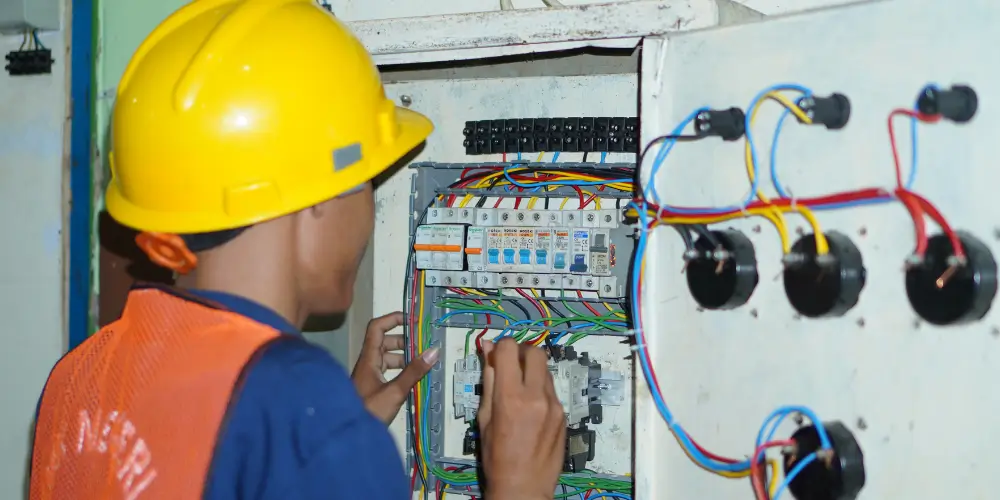
Can any electrician issue an EICR? Before agreeing to any visit, they should confirm that the electrician is a qualified electrician, ideally with City & Guilds 2391 (or equivalent) inspection and testing certification. They should also verify that the contractor is registered with a recognised body such as NICEIC, NAPIT, or ELECSA and is authorised to carry out EICR inspections specifically, not just general electrical work.
Landlords remain legally responsible, so they should request evidence of qualifications, membership numbers, and professional indemnity and public liability insurance. A competent, accredited electrician helps secure both legal compliance and genuine peace of mind.
Ask What Is Included in the Quoted Price
Before accepting any booking, a landlord should pin down exactly what the EICR quote covers and what it does not. Cheap offers can look tempting, but vague wording may hide extra call‑out fees, “admin charges”, or added costs for travel and parking. Clarity in advance keeps the landlord free from surprise invoices later.
They should ask whether the quote is a fixed price for the whole property or a per‑circuit or per‑consumer‑unit fee. It is wise to confirm if VAT is included, how many visits the price covers, and whether any re‑inspection after remedial work will be charged separately.
Landlords should also check if minor adjustments, like tightening loose connections or replacing easily accessible accessories, are included or always charged as extras. Finally, they should demand the quote in writing, with a clear breakdown, so they can compare providers and choose without pressure.
Make Sure Testing Is Fully Completed
Landlords should insist that the electrician carries out a full, methodical inspection and test of the entire fixed electrical installation, not just a quick visual check. A genuine EICR means consumer unit covers off, circuit diagrams or labels verified, and main earthing and bonding to gas, water and structural steel confirmed. The electrician should check meter tails, isolators, RCDs, MCBs, surge protection (if present) and any obvious signs of overheating or damage.
They should also open a representative sample of sockets, switches and light fittings, checking terminations, polarity, and signs of DIY alterations. All circuits must be tested: continuity of conductors, insulation resistance, RCD trip times, earth fault loop impedance, and functional testing of protective devices. Fixed appliances on dedicated circuits, electric showers, storage heaters, immersion heaters, cookers and hard‑wired smoke alarms should be included. External circuits such as garden supplies, garages and outbuildings must not be ignored.
Confirm the Report Includes EICR Codes
Understanding the coding on an EICR is essential, because those codes determine whether remedial work is legally and practically urgent. Landlords who value autonomy over their properties must guarantee the report clearly shows the standard classification: C1, C2, C3 and FI. If these codes are missing, the document is not a usable Electrical Installation Condition Report.
C1 signals immediate danger requiring urgent action; C2 highlights potentially dangerous defects demanding timely correction; FI means “Further Investigation” is needed before anyone can safely rely on the installation; C3 identifies issues that are not dangerous but are recommended for improvement.
Every observation in the report should have a matching code, not vague language. A compliant report will also state whether the overall outcome is “Satisfactory” or “Unsatisfactory,” based on these codes. Without this structure, landlords cannot confidently plan repairs, budgets, or letting decisions while staying within the law.
Avoid Certificates Without Proper Inspection
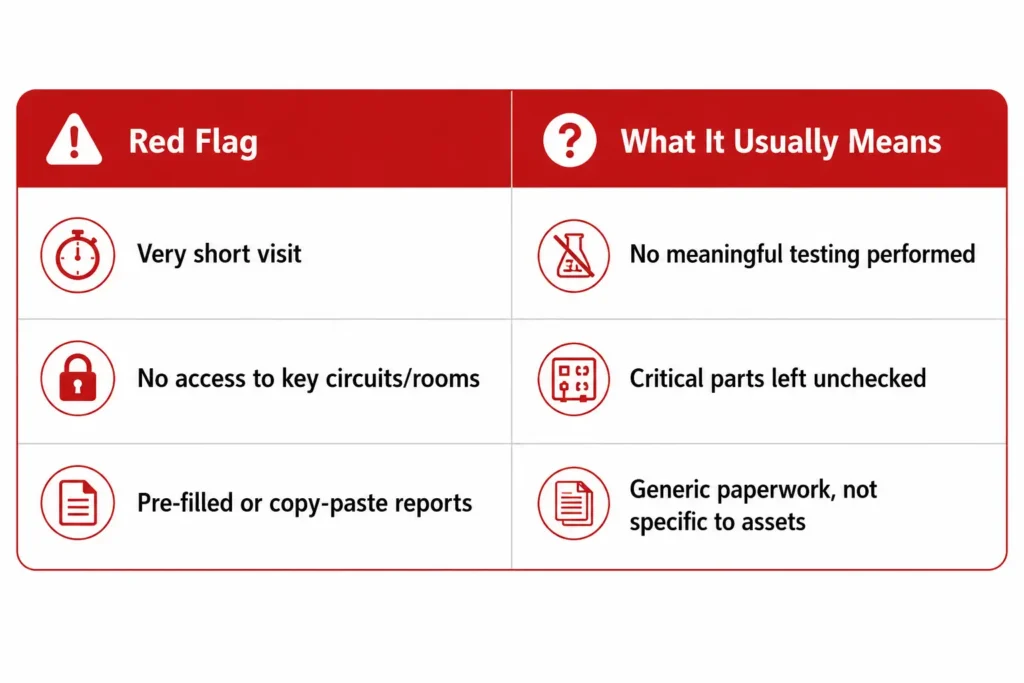
Superficial paperwork that claims compliance without a genuine inspection leaves both tenants and property owners exposed to serious risk. A landlord seeking low‑cost EICR certification must recognise that a document issued without testing, dismantling, or systematic visual checks offers no real protection. It simply transfers hidden danger into the future, where it can surface as fire, shock, or legal action.
A proper EICR involves time on site, calibrated instruments, and evidence‑based observations. One quick way to spot a sham is the engineer’s behaviour: if they barely enter rooms, avoid consumer units, or rush out in minutes, the certificate is likely worthless.
Landlords who insist on genuine inspections protect their freedom from disputes, penalties, and preventable hazards.
Check Local Availability and Response Time
Prompt booking is only useful if an electrician can actually attend when needed, so local availability and response time become as critical as technical competence. Landlords who want minimal disruption to tenants and maximum control over their schedule will prioritise firms that operate within a tight radius of the property and can offer defined arrival windows rather than vague all‑day slots.
A genuinely “near me” EICR provider should state typical lead times for both routine inspections and urgent revisits. Landlords may check whether the contractor offers evenings or weekends, which helps keep tenants’ work and family time free. Online reviews and local forums often reveal how reliably an electrician turns up and how quickly they respond to calls or emails.
For multi‑property portfolios, landlords may favour companies with enough engineers locally to handle several inspections in one visit, limiting repeated access arrangements and unnecessary delays.
Understand the Risks of Very Cheap EICRs
While location and response times matter, the price of an EICR can be just as influential in a landlord’s decision-making and dangerously so when quotes seem unrealistically low. Very cheap certificates often signal cut corners, rushed inspections, or assessors who are not adequately qualified. For a landlord who values freedom from future hassle, that bargain fee can become a trap.
A suspiciously low quote may mean fewer tests are carried out, defects are overlooked, or reports are copy‑and‑paste templates that would crumble under scrutiny. Instead of delivering peace of mind, they can create uncertainty, disputes, and blocked options when refinancing or selling.
Landlords wanting long‑term control over their property and income should question rock‑bottom prices and look beneath the headline figure:
- What exactly is included in the inspection?
- How long will the engineer actually be on site?
- What evidence of testing will be provided?

Know Your Landlord Legal Duties
Although an EICR helps protect both property and tenants, it also sits at the heart of a landlord’s legal responsibilities. In England, the Electrical Safety Standards in the Private Rented Sector (England) Regulations 2020 require periodic inspection of fixed wiring at least every five years, or sooner if the report demands it. Similar duties arise in Scotland and Wales under their respective housing and repairing standards.
Legal obligations limit state interference later; by complying early, landlords retain more control over access, scheduling, and remedial choices. Key duties include providing tenants with a valid report, supplying it to the local authority on request, and acting promptly on any flagged defects.
| Duty Area | Core Requirement | Typical Timescale |
| Inspection Frequency | Arrange EICR at required intervals | At least every 5 years |
| New Tenancies | Provide latest EICR before occupation | Before move‑in |
| Existing Tenants | Share updated EICR promptly | Within 28 days |
| Remedial Work | Fix urgent issues | Within 28 days or sooner |
| Enforcement | Respond to council notices | As specified in notice |
No EICR Before Tenancy Starts: No EICR Certificate Before Tenancy Starts: What Should You Do?
Review the Certificate Before Accepting It
Treat the EICR as a technical contract check, not a box‑ticking exercise. A landlord who values autonomy will not accept a certificate blindly. They verify that the electrician is fully qualified, insured, and that the inspection date, property address, and next‑inspection due date all match the tenancy reality. The report must clearly state “satisfactory” or list coded observations (C1, C2, C3, FI) with unambiguous descriptions.
They also confirm that any recommended remedial works are proportionate and not vague upsells. A cheap EICR is only a bargain if it stands up to scrutiny, protects tenants, and withstands legal challenges.
- Protect their independence – a clear, robust EICR prevents councils and insurers dictating terms later.
- Protect their income – accurate observations help avoid needless rewiring and lost rent.
- Protect their peace of mind – a properly reviewed certificate means fewer surprises, disputes, and enforcement letters.
Frequently Asked Questions
How Often Should Rental Properties in the UK Have an EICR Repeated?
Rental properties in the UK must generally have an EICR repeated at least every five years, or sooner if specified on the report. Landlords choose timely inspections to protect tenants’ safety, meet legal duties, and avoid restrictive enforcement.
Does an EICR Cover Portable Appliances Like Kettles and Toasters?
No, an EICR does not usually cover portable appliances like kettles and toasters; it focuses on fixed wiring. Separate Portable Appliance Testing (PAT) is normally recommended if landlords want full freedom from electrical safety doubts.
Can I Use the Same EICR for Multiple Rental Properties?
No, one EICR cannot legally cover multiple rental properties. Each property’s fixed wiring, circuits, and condition are unique, so every separate dwelling or unit requires its own inspection, report, and certificate to remain compliant.
How Long Does an EICR Inspection Typically Remain Valid for Landlords?
An EICR inspection typically remains valid for landlords for up to five years or until a change of tenancy, whichever comes first. Responsible owners may choose more frequent inspections to preserve safety, autonomy, and hassle‑free renting.
Will an EICR Highlight Energy-Efficiency or Just Safety Issues?
It focuses on safety, not energy-efficiency. An EICR identifies electrical defects, damage, wear and non-compliance. Efficiency gains are only hinted at indirectly, so landlords seeking lower bills or greener systems need a separate energy assessment like an EPC.
Conclusion
In conclusion, landlords seeking a cheap EICR certificate near them in the UK must balance cost with quality and compliance. By verifying the electrician’s qualifications, confirming what the price includes, guaranteeing full testing and accurate coding, and reviewing the final report carefully, they protect both tenants and property. Understanding legal duties and avoiding unrealistically low offers helps guarantee the EICR is valid, reliable, and meets current safety and regulatory standards.